Why ERP and CRM Software Are Important for Business Success?
Vijay Vamja
6-7 mins
Introduction to ERP and CRM
Running a business today is no longer just about selling products or services; it’s about creating seamless operations and meaningful customer connections—both of which are driven by technology.
Enterprise Resource Planning (ERP) and Customer Relationship Management (CRM) systems are pivotal in this process. ERP systems streamline internal processes, leading to a 66% improvement in operational efficiency for organizations that implement them. On the other hand, CRM systems enhance customer interactions, with 74% of businesses reporting better access to customer data after adoption.
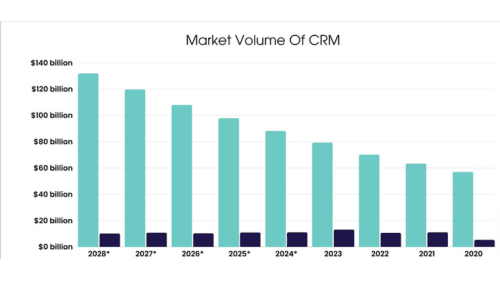
In this article, we’ll explore the critical role ERP and CRM systems play in driving business success. We’ll also break down the key differences between these two systems. Let’s dive into what ERP and CRM are, along with the standout features that can empower your business.
What is Enterprise Resource Planning (ERP)?
Enterprise Resource Planning (ERP) is software that combines all your business processes, like HR Recruitment, real estate, supply chain, and manufacturing, into one system. It gives real-time data access across departments, helping teams work together efficiently. ERP improves productivity, reduces costs, and simplifies operations by eliminating disconnected systems and streamlining workflows.
Features of ERP System
- Integrated Modules: Combines finance, inventory, HR, and other processes into a single unified system.
- Automation: Streamlines repetitive tasks such as payroll processing, invoicing, and order tracking.
- Real-Time Data: Provides up-to-date insights into operational metrics for informed decision-making.
- Scalability and Integration: Supports business growth with modular features and seamless integration with third-party applications.
- Reporting and Analytics: Offers real-time data visualization, customizable dashboards, and comprehensive reports for informed decision-making.
What is Customer Relationship Management (CRM)?
Customer Relationship Management (CRM) is a software solution designed to manage and improve interactions with customers throughout their lifecycle. It centralizes customer data, tracks leads, automates sales processes, and provides insights into customer behavior, helping businesses enhance relationships and boost loyalty.
Features of CRM System
- Contact Management: Stores and organizes customer data in a single platform.
- Lead Management: Monitors leads through every stage of the sales funnel.
- Automation Tools: Automates tasks like follow-ups, email campaigns, and reporting.
- Analytics and Reporting: Provides insights into customer behavior and campaign performance.
- Mobile Access: Offers mobile apps to allow sales and support teams to access CRM data on the go.
Why ERP and CRM Software Are Important for Business Success?
1. Streamlined Business Operations
Running a business often means dealing with fragmented systems where each department uses separate tools and processes. ERP software eliminates this problem by integrating all your business functions into a unified platform. To fully optimize your business operations, hire ERP developers who can customize and integrate the right ERP system tailored to your specific needs.
Similarly, CRM automates tasks like customer follow-ups and sales tracking, helping you respond faster to customer inquiries and build trust. This integration not only saves time but ensures that your operations run like a well-oiled machine, giving you more bandwidth to focus on growth.
2. Improved Decision-Making
In the business world, your decisions are only as good as the data you have. ERP systems provide real-time insights into critical areas like inventory levels, production timelines, and financial performance. For instance, if you're running low on stock for a high-demand product, ERP can alert you before it becomes an issue.
On the other hand, CRM software tracks customer behavior and sales performance, giving you a clear understanding of your customers’ needs. With these insights, you can launch targeted marketing campaigns or introduce new products based on actual demand, reducing the risk of costly missteps.
3. Enhanced Customer Relationships
You know that acquiring customers is more expensive than retaining older ones. CRM software helps you nurture these relationships by storing detailed customer profiles, including purchase history, preferences, and feedback.
ERP ensures smooth backend processes, such as timely order fulfillment and accurate billing. Together, they create an excellent customer experience that fosters loyalty and encourages word-of-mouth referrals.
Read more: How AI Will Enhance Customer Experience
4. Cost and Time Efficiency
Managing operational costs is one of the biggest challenges. ERP software helps by automating repetitive tasks like payroll processing, inventory management, and expense tracking. This not only saves time but also minimizes human errors that could lead to financial losses.
Meanwhile, CRM automates marketing and sales workflows, allowing your team to focus on high-priority tasks like closing deals rather than manually updating records. By streamlining these processes, both systems free up your resources, helping you reinvest time and money into areas that drive growth.
5. Scalability and Growth
As your business grows, the complexity of managing operations and customer relationships increases. ERP software is designed to scale with you, offering advanced features like multi-location inventory tracking or global financial reporting. This ensures that even as you expand into new markets or launch additional product lines, your operations remain efficient.
CRM plays an equally important role by helping you manage a growing customer base. It provides tools for segmenting your audience, creating personalized engagement strategies, and tracking long-term customer value. Together, ERP and CRM systems ensure your business can grow without outgrowing its processes.
6. Better Collaboration
Disjointed communication can be a silent killer for businesses, especially as teams grow. Every ERP software development company addresses this by creating a centralized platform where every department can access and share information. For example, your sales team can check inventory levels in real-time before promising delivery timelines to customers.
CRM enables seamless collaboration between your sales, marketing, and customer support teams by centralizing customer interaction data in one place. This ensures consistency in messaging and service delivery, making your team more effective and your customers happier.
7. Regulatory Compliance
Whether you're a small business or a multinational company, adhering to regulations is non-negotiable. ERP software helps by maintaining accurate records, generating audit-ready reports, and automating compliance checks. For example, if you operate in a highly regulated industry like healthcare or finance, ERP can ensure that all processes meet industry standards.
CRM complements this by safeguarding customer data, helping you comply with privacy laws such as GDPR or CCPA. By automating compliance, these systems reduce the risk of fines and protect your reputation, giving you peace of mind.
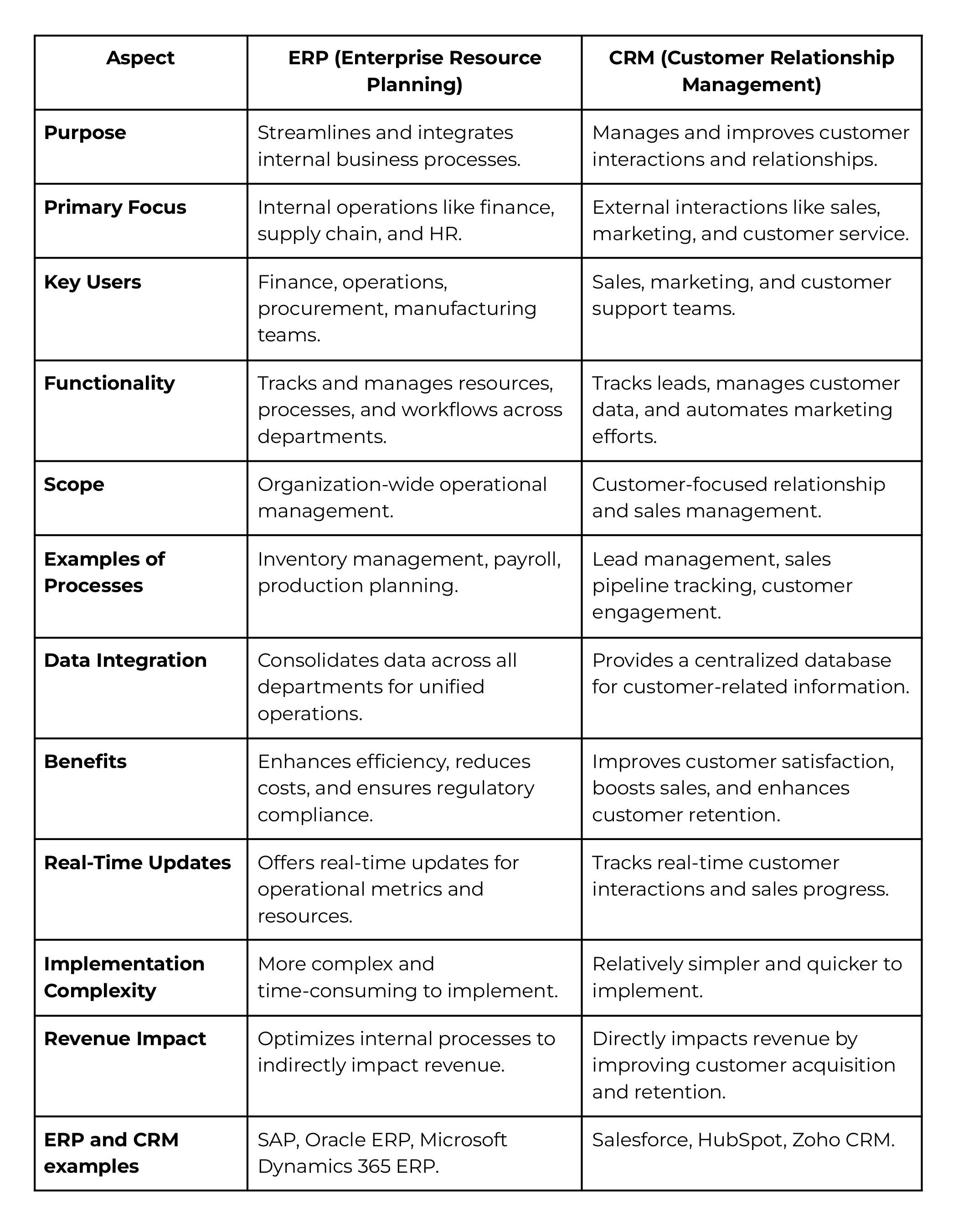
ERP vs CRM: Key Differences
To help you differentiate between both ERP and CRM systems, we have created a table showing the difference between ERP and CRM:
Wrapping Up
When deciding between ERP and CRM, the right choice depends on your business's specific needs and objectives. Both systems provide powerful tools to maximize efficiency and foster growth—whether you're looking to optimize internal operations or strengthen customer relationships.
Why should you act now?
ERP and CRM integration in business isn’t just about keeping up with technology; it’s about creating a foundation for sustainable success. These systems enable you to operate more efficiently, serve your customers better, and scale your operations without unnecessary growing pains. Whether you're just starting or looking to take your business to the next level, ERP and CRM are investments that will pay dividends in productivity, customer satisfaction, and profitability.
By investing in CRM and ERP software development services, you can implement tailored solutions designed to address your unique business challenges. These services not only streamline operations and enhance customer management but also provide scalable platforms to support your long-term growth and efficiency goals.