AI Systems Integrator Market Size & Opportunity
Vijay Vamja
3-4 mins
The AI systems integrator market is exploding and you should be ready by now for the gold rush. Not yet? Well, let's be real. "Buying AI" is the new "buying a Peloton."
Everyone did it in a panic over the last 18 months. You've got the fancy Generative AI Development platform. You've got the shiny new chatbots. You've got... a digital mess.
Your new tools don't talk to your legacy systems. Your CRM and your new AI model are in a cold war. Your expensive new "brain" isn't actually integrated into your core AI workflows, so it's just sitting there looking smart.
Sound familiar?
It's the digital equivalent of an expensive, AI-powered coat rack.
Enter the AI systems integrator. The adult in the room. The real hero of the AI revolution (and the one who'll save you from having to explain that $2M "experiment" to your board).
What is an AI Systems Integrator, Anyway?
Think of them as the master plumbers for the digital age.
You bought all the shiny AI fixtures - the self-thinking toilet, the smart shower... but someone has to connect the pipes so you don't flood the house.
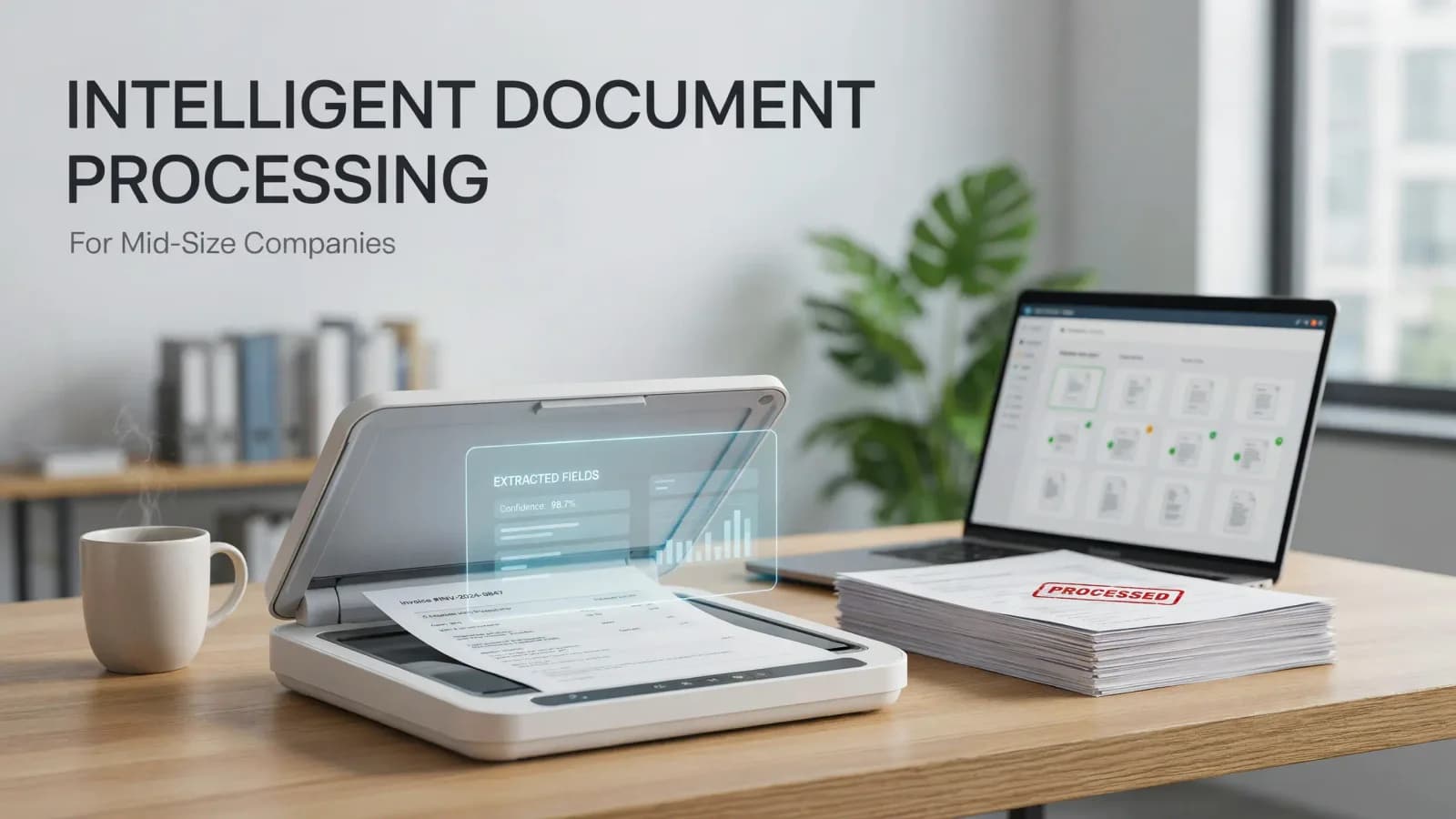
An AI systems integrator (or AI integrator for short) is the specialist partner responsible for the actual artificial intelligence integration. They take your disparate AI-based solutions like your new LLM, your old-school ERP, your customer database, your marketing automation, and weave them together into a single, functional, value-generating machine.
It's the difference between having a box of high-tech LEGOs and having a fully-built, revenue-generating Death Star.
The Market Isn't Just "Big." It's Two-Speed and Chaotic.
Okay, let's talk numbers. Because money talks, and this market is shouting. But to "get" the opportunity, you have to see the two-speed economy at play.
1. The "Old Guard" (Traditional System Integration)
This is the massive, established market for connecting all IT systems. It's a goliath, valued at over $410 billion in 2024. But it's growing at a predictable 11.2% CAGR. It's your reliable, slightly boring (but necessary) uncle.
2. The "New Gold Rush" (AI-Specific Services)
This is where things get wild. The "AI as a Service" (AIaaS) market i.e., the engine driving the need for integration is exploding. Valued at around $17 billion in 2024, it's projected to rocket to over $215 billion by 2032, clocking in at a jaw-dropping 37% CAGR.
The AI systems integrator is the specialist who lives in the chaos between these two worlds. They are the only ones who can translate between the 11% uncle and the 37% teenager with a Red Bull addiction. That is the opportunity.
The "Why Now?" Problem: Welcome to the Pilot "Graveyard"
For the last 18 months, everyone was obsessed with the demo. "Look! It wrote a poem about our Q3 earnings!"
Cool. Did it reduce churn? Did it increase ARPU? Did it do anything?
The party's over. The 'Era of Cool Demos' is dead. Welcome to the 'Era of Integrated Workflows.'
Here's the data that should scare you:
- 78% of organizations are now using AI in at least one business function. (Hooray, adoption!)
- But... only 23% have managed to actually embed AI across their business.
- Worse, a staggering 60% of large-scale AI projects never even make it out of the pilot phase.
That gap between 78% "trying" and 23% "succeeding" is a graveyard of wasted budgets and sad, lonely AI models. It's the reason enterprise AI system integration isn't just a "nice to have"; it's a "we-are-going-bankrupt-without-this" imperative.
The Real Opportunity (Hint: It's Not Just for Tech Giants)
Good news: This isn't just a game for Google and Microsoft. The biggest opportunity is for smart, agile companies (like yours... right?).
While your competitors are still trying to figure out how to incorporate AI into your business by copy-pasting from a chatbot, you can be lapping them.
The opportunity is in depth, not breadth. Instead of 10 shallow AI business solutions, you can have one deeply integrated system that revolutionizes a core process.
- Connect your new AI Voice Agent Development directly to your CRM and support tickets, so it knows the customer's history.
- Build Agentic AI Solutions that don't just find data, but act on it across your entire tech stack.
- Create an AI Agent Development that doesn't just draft sales emails but syncs with your CRM, analyzes past performance, and schedules the follow-up automatically.
That's not a fantasy. That's just good AI system integration.
When You Need an AI System Integrator - Don't Just Hire "Some AI Guy."
Still reading? Awesome. You've passed the test. You get it. You're ready to move from "playing with AI" to "profiting with AI."
But - and I say this with respect - you can't just throw this at your existing IT team (bless their hearts) or hire the cheapest "AI developer" on a freelance site. You are integrating the future brain of your company. This is a job for pros.
You don't just need a coder; you need a strategic partner. You need one of the top AI integration companies.
What to look for in a real AI development company:
- Strategic Chops: Do they offer AI Consulting? Or do they just want to build? You need a partner who asks "why" (and "what's the ROI?") before they ask "how."
- Flexible Talent: The best partners scale with you. Can they provide Staff Augmentation for a specific project? Or can you Hire Dedicated Team to own the entire build?
- Proven Process: Ask for AI integration examples. If their 'case studies' are just screenshots of ChatGPT, run. You need to see complex AI workflows and real enterprise AI systems they've built. (P.S. They should absolutely be masters of MVP Development services to get you to value fast.)
Don't Get Left Behind Holding the (Very Smart AI) Coat Rack
The AI systems integrator market is booming for one simple reason: it's the missing piece. It's the bridge from "that's a cool AI" to "this AI just saved us $4 million."
You've already bought the tools. You've seen the demos. Now, it's time to actually use them.
Don't let your AI be a $10 million paperweight. Let's talk about hooking it up.
Tired of demos and ready for real integration? Our team lives for this stuff. Check out our AI Consulting services, and let's build something that actually works.
FAQs
Q. What's the real difference between an AI developer and an AI systems integrator?
It's the "engine vs. car" problem. See, an AI developer builds you a high-performance engine.
An AI systems integrator is the master mechanic who installs that engine into your car, connects it to the transmission (your CRM), the steering (your ERP), and the dashboard (your analytics).
One builds the part, the other builds the car. We’ve seen too many companies with a very expensive engine sitting on the garage floor, wondering why they're not going anywhere.
Q. What's the single biggest mistake you see companies make in AI integration?
Easy. They start with the tech, not the problem.
They buy a flashy Generative AI Development platform because it's cool (we call this the 'pilot graveyard'), then try to find a problem for it to solve. It's completely backward.
Our AI Consulting process always starts with your core business workflow and asks: "Where is the real bottleneck costing us money?" Then we pick the tool. Not the other way around.
Q. Why is the AI integrator market growing so much faster than traditional IT integration?
Because traditional IT is plumbing; AI is the brain.
The old market (connecting databases, 11% growth) is a known quantity. It's necessary, but it's just moving data. The new market (making that data think and act, 37%+ growth) is the new frontier.
Enterprise AI system integration isn't just about data moving anymore; it's about data deciding. That's a completely different (and way more valuable) ballgame.
Q. How do I even start an AI integration project? It feels overwhelming.
Don't worry, we've got you. You don't boil the ocean. You start with one, high-value project.
We're huge fans of the MVP Development services approach. We'll help you identify a "quick win" - a single, painful workflow - and build an integrated AI-based solution for that.
Once you see the ROI (and you will), you'll have the internal proof you need to go bigger. It's a marathon, but you start with one smart step.
Q. What are some real-world AI integration examples that aren't just... chatbots?
Connecting an AI Voice Agent Development to your live inventory database and CRM. A customer calls, the AI knows who they are, knows their last order, and knows if the new item is in stock - all without a human.
Building Agentic AI Solutions that monitor your sales pipeline, identify stalled deals based on sentiment, and automatically draft and schedule follow-ups for your team.
That's not just AI integration in business; it's true AI business automation.
Q. What if I have the strategy, but not the people to build it?
You just described 90% of the companies we talk to. Strategy is the (relatively) easy part; execution is everything.
This is exactly why we offer flexible models. You can Hire Dedicated Team to own the entire project, or use our Staff Augmentation to get a top-tier hire dedicated developer with the specific AI integration skills you're missing.
We fill the gaps so you can actually get it done.