Automation as a Service (AaaS): The Enterprise Guide to AI Automation
Dharmesh Dave
8-10 mins
Enterprise automation is today beyond a mere software purchase, as it's presently becoming a foundational strategic utility. Organizations are shifting from buying disparate tools to consuming automation outcomes. This paradigm shift defines Automation as a Service (AaaS). The rise of AI-native enterprises accelerates this transition. Leaders demand scalable solutions without the burden of infrastructure maintenance. A new automation maturity curve has emerged. It replaces static scripts with dynamic intelligence.
What Is Automation as a Service?
Automation as a Service is a cloud-based delivery model. It provides enterprise automation capabilities on demand. Organizations access workflows, AI agents, and orchestration engines through subscription frameworks. AaaS abstracts underlying infrastructure complexity. It allows businesses to focus entirely on process optimization.
How AaaS Differs from Traditional Automation
Traditional automation requires heavy upfront investment. Companies must buy licenses, host servers, and hire developers. Automation as a Service operates on continuous cloud delivery. Traditional robotic process automation relies on rigid scripts. AaaS leverages dynamic AI workflow automation services.
Evolution from SaaS to Intelligent Automation Services
Software as a Service standardized application delivery. AaaS standardizes process execution. The market has entered the era of intelligent automation services. Cognitive capabilities are embedded directly into the service layer. AaaS blends cloud scalability with artificial intelligence.
Why Enterprise Automation Is Entering a New Era
1. The Limits of Manual Operations
Manual operations cannot scale. Human workers face absolute limits in speed and processing capacity. Manual data entry introduces unacceptable error rates. These bottlenecks stifle enterprise growth. Modern compliance demands precision that manual processes cannot consistently deliver.
2. The Cost of Process Fragmentation
Siloed departments create fragmented workflows. This fragmentation causes severe data loss and communication breakdowns. Disconnected systems require manual data bridging. This creates massive hidden costs. An enterprise automation strategy eliminates these painful silos.
3. Why Traditional Platforms Fall Short
Legacy robotic process automation breaks when user interfaces change. Traditional platforms lack the cognitive ability to handle exceptions. They cannot process unstructured data effectively. Scaling traditional RPA across a global enterprise is notoriously difficult.
Core Components of an Automation as a Service Platform
1. Workflow Orchestration Layer
The orchestration layer is where most enterprise automation projects either succeed or collapse. It is responsible for maintaining state across distributed process steps - meaning when a system call fails, a timeout occurs, or a dependent upstream task is delayed, the orchestration layer must decide whether to retry, reroute, escalate, or halt. Unlike static schedulers, a well-built orchestration layer treats exceptions as first-class events, not afterthoughts.
For enterprises running dozens of concurrent workflows across fragmented SaaS stacks, this is the component that determines whether the overall architecture is operationally durable or perpetually fragile.
2. Integration Layer
The integration layer is where the practical reality of enterprise architecture diverges sharply from vendor demos. In production environments, many legacy systems expose partial APIs, require screen-scraping workarounds, or operate on data schemas that differ from what the official documentation describes.
A mature integration layer accounts for this: it handles authentication edge cases, manages rate limits and retry logic, and normalizes data formats across systems that were never designed to communicate with each other. The difference between an automation that survives for 18 months and one that breaks within 90 days often comes down to how thoughtfully this layer was engineered.
3. AI and Decision Intelligence Layer
This is the layer that separates genuine intelligent automation from rebranded RPA. Its function is not simply to classify inputs - it is to handle the edge cases that rule-based systems cannot. Most enterprise data arrives in a form that was never designed for machine consumption: unstructured PDFs, inconsistently formatted emails, variable-schema spreadsheets, and images with embedded text.
The AI and decision intelligence layer must extract signals from this noise, then apply routing logic that accounts for context, not just pattern matching. The practical implication: this layer requires ongoing calibration. Models drift as data patterns change, and business rules evolve with regulatory requirements. Treating this layer as a “configure once” component is one of the most common and costly mistakes in enterprise automation deployments.
4. Agent Layer
AI agents introduce a fundamentally different operating model compared to traditional automation. A standard automation workflow executes a pre-defined sequence of steps. An agent, by contrast, is given an objective and determines its own execution path - selecting tools, calling APIs, evaluating intermediate results, and adapting its approach when a step fails or produces an unexpected output.
In enterprise contexts, this means agents can handle tasks that were previously too variable or judgment-intensive for traditional automation: complex document review, multi-step supplier negotiations, or dynamic resource allocation across shifting operational conditions. The tradeoff is governance complexity. Autonomous action requires precise constraint definitions, because the same flexibility that makes agents powerful also makes them capable of taking consequential actions outside their intended scope.
5. Governance and Security Layer
Governance is the layer most organizations underinvest in until something goes wrong. In practice, this means defining and enforcing exactly what each automated process and agent is permitted to access, modify, and execute - and logging every action with enough context to reconstruct what happened and why.
For enterprises in regulated industries, this layer is not optional infrastructure; it is the evidence layer that supports compliance audits, incident investigations, and regulator inquiries. Beyond compliance, robust governance prevents the operational drift that accumulates when automation portfolios grow without accountability structures: shadow workflows, orphaned bots with stale credentials, and processes that were automated around a business rule that has since changed.
The State of Enterprise Automation: 2026 Research Layer
To understand the trajectory of AaaS, we must examine current enterprise data. Leading research firms confirm a massive shift toward intelligent, service-based automation architectures.
Gartner
Gartner projects that by 2026, 30% of enterprises will have automated more than half of their network activities - up from under 10% in mid-2023. Hyperautomation remains a strategic priority for 90% of large enterprises, driven by AI infrastructure demands and the need for operational resilience. Gartner highlights a parallel shift toward multi-agent systems and AI-native platforms. Automation is no longer an overlay; it is the core business operating system.
McKinsey & Company
McKinsey's State of AI 2025 reveals 88% of organizations now use AI in at least one business function. However, only roughly one-third (~33%) have scaled it beyond experiments into enterprise-wide deployment. High performers view automation as a growth engine, not just a cost-cutting tool. McKinsey emphasizes that 62% of companies are experimenting with AI agents, but success requires deep workflow redesign.
McKinsey's State of AI 2025 breakdown covers how high-performing enterprises are scaling AI and automation beyond isolated pilots - and what separates the top 33% from the majority still stuck in experiment mode.
McKinsey & Co - State of AI 2025: Key Insights →
Deloitte
Deloitte's 2026 Global Human Capital Trends research - drawn from over 13,000 leaders across 90 countries - confirms that human-AI collaboration is fundamentally redefining workforce roles.
Organizations that intentionally redesign workflows around human-machine integration are measurably more likely to exceed their AI investment return expectations. Deloitte's State of AI in the Enterprise 2026 report further documents that AI spend is rising across enterprise functions, but ROI remains elusive without deliberate operating model redesign.
IBM
IBM's 2025 CDO Study: The AI Multiplier Effect - surveying 1,700 Chief Data Officers across 27 geographies - identifies data silos and skill shortages as the dominant barriers to enterprise AI adoption. In 2025, 77% of CDOs report difficulty attracting or retaining top data talent, a sharp jump from 62% the prior year.
IBM's VP and CDO Ed Lovely has spoken publicly on the operational drag created by fragmented data environments, noting that disconnected data infrastructure consistently extends enterprise AI deployment timelines by forcing data remediation work before meaningful model deployment can begin. Only 26% of CDOs are currently confident their data infrastructure can support new AI-enabled revenue streams.
PwC
PwC's published AI research documents a widening performance gap between organizations that treat AI governance as a strategic asset versus those treating it as a compliance obligation.
Their research consistently finds that a small tier of AI-leading organizations captures a disproportionate share of measurable AI returns - driven by structured Responsible AI frameworks, cross-functional governance boards, and deliberate investment in employee AI literacy. PwC's 2025 Responsible AI Survey further confirms that 60% of executives say robust AI governance directly boosts ROI and operational efficiency.
Proprietary Frameworks for Enterprise Automation
Deploying AaaS requires rigorous strategic alignment. We utilize four proprietary models to guide enterprise transformation.
1. The Automation Readiness Score (ARS)
The ARS quantifies an organization's preparedness for AaaS. It evaluates four pillars:
- Process Standardization: Are workflows documented and repeatable?
- Data Quality: Is data structured, clean, and accessible?
- Infrastructure: Can current systems support cloud integrations and APIs?
- Culture: Is there executive sponsorship and change management capacity?
Scores above 80 indicate readiness for autonomous agent deployment.
2. The Automation Opportunity Matrix
This framework categorizes processes to prioritize implementation.
- High Value, Low Complexity: Quick wins (e.g., invoice data extraction).
- High Value, High Complexity: Transformational projects (e.g., autonomous supply chain routing).
- Low Value, Low Complexity: Task automation (e.g., basic email sorting).
- Low Value, High Complexity: Discard or re-engineer completely.
3. AI Agent Adoption Model
Organizations progress through distinct phases of agentic integration.
- Phase 1 (Assistive): Agents act as copilots, requiring manual execution triggers.
- Phase 2 (Delegated): Agents execute multi-step workflows with human-in-the-loop approvals.
- Phase 3 (Autonomous): Agents operate independently within strict governance guardrails.
4. Enterprise Automation Maturity Index
We classify enterprise maturity across five levels:
- Level 1: Fragmented manual operations.
- Level 2: Isolated robotic task automation.
- Level 3: Connected business process workflows.
- Level 4: Intelligent AaaS orchestration.
- Level 5: Self-optimizing, agent-driven operations.
Commercial Blueprint: Pricing, Build vs Buy, and ROI
AaaS Pricing Models
AaaS shifts automation from capital expenditure to operational expenditure. Providers typically utilize three pricing models:
- Consumption-Based: You pay per workflow execution or API call. This is ideal for highly variable, seasonal workloads.
- Outcome-Based: Pricing is tied to specific business metrics, like the number of invoices processed successfully.
- Subscription Tiers: Flat monthly fees based on the number of active digital workers or connected systems.
Build vs Buy Framework
Enterprises must decide whether to build internal centers of excellence or consume AaaS.
- Choose Build When: You possess extreme data sensitivity requirements. You have highly proprietary, undocumented core systems. You maintain a surplus of internal AI engineering talent.
- Choose AaaS (Buy) When: Speed to market is critical. You want to avoid technical debt. You require access to constantly evolving AI agent models without maintaining them.
Vendor Selection Matrix
When evaluating an automation consulting company, assess these critical dimensions:
- Architecture: Do they offer cloud-native orchestration or legacy desktop scripting?
- Intelligence: Can their platform natively parse unstructured data using LLMs?
- Governance: Do they provide centralized audit trails and role-based access controls?
- Scalability: Can the platform automatically provision resources during traffic spikes?
ROI Benchmarks
McKinsey's operations automation research and its 2026 agentic AI infrastructure analysis document the following performance ranges for well-scoped enterprise deployments:
- Operational Cost Reduction: 30% - 60% across operations functions within the first 12 months.
- Routine Work Automated: 60% - 80% of routine infrastructure & back-office tasks via agentic AI.
- Error Rate Reduction: Near-zero for rule-based data entry and document processing workflows.
- Payback Period: Well-scoped enterprise deployments consistently report full payback within the first year, with top-quartile performers recovering investment costs within six months - driven primarily by labor cost displacement in high-volume, repetitive process functions.
Benefits of Automation as a Service
1. Reduced Operational Costs
The cost reduction narrative for AaaS is more nuanced than the CapEx-to-OpEx conversion that most vendor materials lead with. The real financial leverage comes from eliminating the hidden labor tax embedded in high-volume, low-judgment processes - the employee hours consumed by data re-entry between systems, manual status tracking, and exception handling that only exists because systems don't communicate.
These costs rarely appear as a line item; they are distributed across headcount and buried in process cycle times. Well-scoped AaaS deployments make them visible and then eliminate them, which is why CFO-level buy-in tends to accelerate once a baseline measurement is established rather than estimated.
2. Increased Scalability
Scalability in AaaS context means something more specific than “handles more volume.” It means the architecture does not require human re-engineering when process volume doubles, when a new business unit is onboarded, or when a new data source is added.
Legacy automation approaches fail this test because they encode assumptions about input format, system availability, and exception logic into each individual workflow. AaaS platforms built on cloud-native orchestration decouple these concerns, allowing volume growth and geographic expansion to be absorbed at the infrastructure level without rebuilding the automation logic layer.
3. Improved Compliance
Compliance automation is one of the highest-conviction use cases for AaaS - not because automation is infallible, but because it produces evidence. Every action is timestamped, logged, and attributable to a defined process step. In a manual environment, demonstrating compliance means reconstructing what happened from emails, spreadsheets, and employee recollections.
In an automated environment, the audit trail is a byproduct of execution. The more significant benefit in regulated industries is consistency: automated processes apply the same rules in the same sequence regardless of which employee would have handled the task, eliminating the interpretation variance that is the root cause of most compliance exposure.
4. Faster Innovation Cycles
The innovation cycle benefit is real but tends to be realized later than the cost and compliance benefits, which is important to set expectations around. In the first six to twelve months, automation primarily accelerates existing workflows. The compounding effect - where freed engineering capacity is directed toward higher-order problems - requires deliberate allocation.
Organizations that explicitly redirect reclaimed capacity into product and process development see meaningfully different outcomes than those that absorb efficiency gains into headcount reductions. The highest-performing enterprises treat automation as a capacity expansion model, not a headcount reduction model, which changes both where investment gets directed and how quickly the innovation dividend appears.
Enterprise Automation Use Cases by Business Function
Finance
Finance teams carry a disproportionate share of enterprise automation ROI - and the reason is volume. A mid-market company processing 2,000 invoices per month through a three-step manual approval chain is absorbing costs that compound invisibly: late payment penalties, duplicate payments from keying errors, and AP staff time that could be directed toward vendor relationship management or cash flow analysis.
AaaS deployments in finance typically start with structured document extraction (invoices, purchase orders, expense reports), build a reconciliation layer that cross-references against ERP records, and add exception routing for items that fall outside approval thresholds. The pattern is consistent. The payback period is short. The harder challenge is change management with finance teams who have built personal workflows around the manual process.
Human Resources
HR automation creates the most visible employee experience impact of any function - for better or worse. When onboarding automation works correctly, a new hire has their accounts provisioned, equipment ordered, and first-week agenda populated before their start date. When it fails because a field was missed or a HRIS integration broke overnight, the new employee's first impression of the company is a laptop that doesn't work and a system they can't log into.
This is why HR automation requires more rigorous exception handling and human-in-the-loop checkpoints than most other functions. The highest-leverage HR automation targets are the processes with the clearest handoff triggers: offer letter generation after verbal acceptance, IT provisioning after contract signature, benefits enrollment triggered by employment start date. These are deterministic event chains that should require zero manual coordination.
IT and Security
IT is both the function that benefits most from AaaS and the function most likely to resist it - because IT teams are often the ones asked to maintain automation infrastructure they didn't choose and don't control. The most effective IT automation deployments treat the IT team as a design partner, not a deployment target.
In practice, the highest-leverage IT automation use cases fall into two categories: provisioning workflows (user access management, infrastructure spin-up, environment configuration) and incident response workflows (anomaly detection, alert triage, initial containment actions). The provisioning category is high volume and almost entirely rule-based, making it well-suited for traditional automation. The incident response category is where AI agents add the most value - specifically in the triage phase, where context aggregation from multiple monitoring systems is more important than raw execution speed.
How AI Agents Transform Automation as a Service
Rule-Based Automation vs Agentic Automation
Rule-based systems follow strict logical paths. They break when encountering unexpected variables. Agentic automation operates with defined goals and high autonomy. AI agents adapt to changing environments. They represent a massive leap beyond rigid RPA.
Multi-Agent Workflows
Complex business problems require multi-agent collaboration. One agent extracts data from a contract. A second agent verifies the legal clauses. A third drafts the approval email. This cooperative approach defines modern AI workflow automation.
Enterprise Agent Governance
Deploying autonomous agents requires strict enterprise agent governance. Organizations must define exactly what an agent is allowed to do. Spending limits and data access permissions must be hardcoded. Governance prevents operational chaos.
Building an Enterprise Automation Roadmap
Discovery and Assessment
The roadmap begins with comprehensive process discovery. Automation consultants interview process owners. Process mining tools analyze system logs. The assessment phase evaluates technical feasibility and business value.
Discover where AI can scale your business, Try AI Readiness Audit today!
Prioritization Framework
Enterprises need a strategic prioritization framework. High-ROI, low-complexity processes are prioritized for immediate implementation. This builds early momentum. A strategic enterprise automation roadmap categorizes projects effectively.
Scaling Across Departments
Once pilot projects succeed, scaling begins. The automation center of excellence documents best practices. The AaaS platform expands into adjacent departments gradually. The digital workforce expands steadily under strict governance.
How to Implement Automation as a Service
Technology Selection and Vendor Evaluation
Evaluate platforms based on integration capabilities and AI features. Assess vendor financial stability and uptime metrics. A strong AI automation vendor acts as a strategic partner. Look for deep expertise in your specific industry.
Integration and Security Planning
Map all necessary data flows before writing any code. Identify legacy systems that lack modern APIs. Define role-based access controls for all digital workers. Conduct rigorous penetration testing on new automated workflows.
Success Metrics
Organizations must calculate return on investment accurately. Track metrics like hours saved, error reduction rates, and processing times.
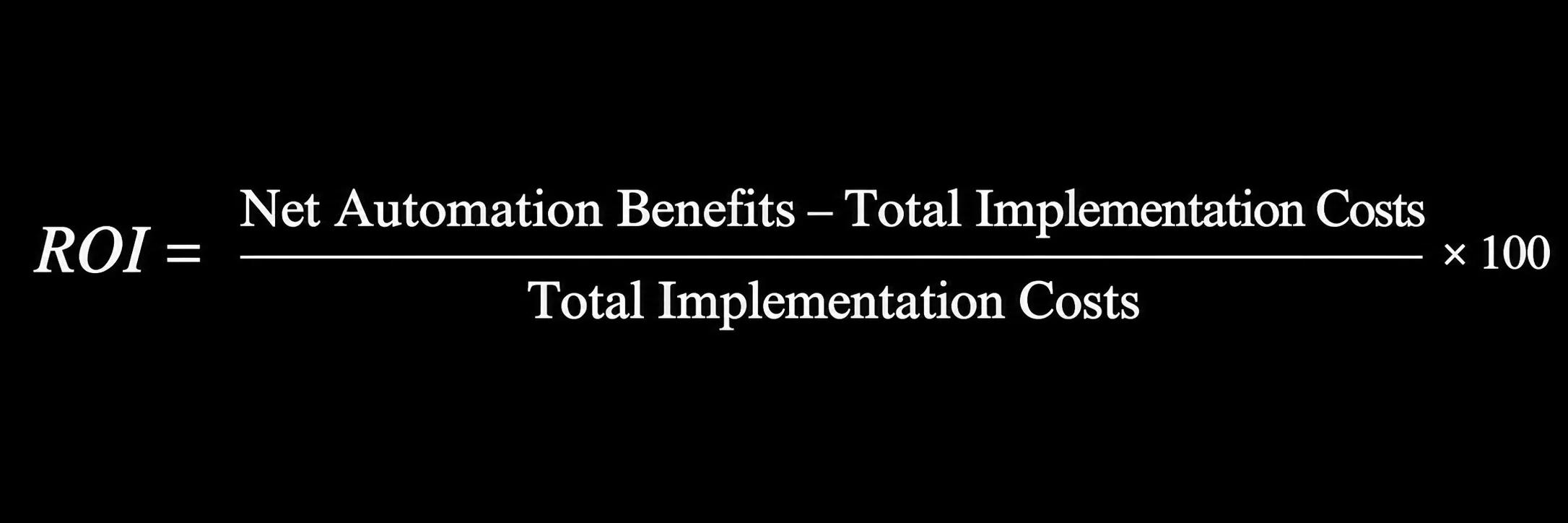
Tie these technical metrics directly to business outcomes like revenue growth.
How to Choose an Automation Consulting Partner
Technical Expertise
An automation development company must possess deep technical skills. Verify their certifications with major cloud platforms. They must understand cloud orchestration, API development, and infrastructure as code deeply.
AI Capabilities
Traditional RPA experience is no longer sufficient. Your partner must understand modern AI automation services. Evaluate their experience deploying enterprise AI agents. Ask about their proprietary AI frameworks.
Industry Experience
Automation challenges vary wildly across sectors. Healthcare automation requires deep knowledge of HIPAA compliance. Choose an automation services company with a proven track record in your industry. Generalists often fail at complex workflows.
What Enterprise Deployments Actually Reveal
Common Implementation Failures
After overseeing enterprise deployments across multiple industries and stack configurations, distinct failure patterns emerge consistently.
- Automating Broken Processes: Digitizing a bad process only scales inefficiency. You must re-engineer before you automate.
- Ignoring Change Management: Employees actively resist systems they do not understand. Transparent communication prevents adoption failures.
- Data Swamp Dependency: AI models hallucinate when fed garbage data. Clean your data pipelines before deploying intelligent automation.
- The Pilot Trap: Companies build one successful pilot but fail to establish governance. They never scale beyond a single department.
Case Study 1: From Fragmented RPA to Agentic Orchestration (B2B SaaS)
The following is an anonymized account of a Ciphernutz client engagement.
A mid-market B2B SaaS company came to us 18 months after investing in a traditional RPA solution. Within four months of their original deployment, a routine CRM update broke three core automations. The team reverted to manual processes. The RPA tooling sat unused.
Our initial diagnostic surfaced the root cause: eleven disconnected SaaS tools with no shared data layer. Rigid, script-based automations were structurally fragile by design - not by accident. Re-automating on the same foundation would repeat the same failure cycle.
We ran an AI Automation Sprint - a focused four-week discovery and build cycle. The output was an n8n orchestration layer connecting their CRM, billing platform, and project management tool, with two AI agents deployed on top: one handling client onboarding intake and intelligent routing, the second performing invoice reconciliation across mismatched data formats.
Outcomes at 90 days post-deployment:
- Manual data entry hours reduced by 67%
- Client onboarding cycle compressed from 4.5 days to under 9 hours
- Zero automation breaks across two subsequent CRM updates
The architecture held because it was built on AI-native, API-first orchestration - not brittle UI scraping. That is the practical difference between legacy RPA and modern AaaS.
Case Study 2: Claims Processing Transformation (Insurance)
The following is an anonymized account of a Ciphernutz client engagement.
A regional property and casualty insurance carrier was processing over 4,000 claims per month through entirely manual workflows. Claims adjusters spent the majority of their time on document triage - extracting policy numbers, damage descriptions, and supporting evidence from unstructured PDFs, emails, and mobile photos - rather than on actual claims assessment.
Average settlement time sat at nine days. Error rates in document classification were running at 14%, creating costly rework cycles and compliance exposure under state filing requirements.
Engagement To Delivery:
The engagement began with Ciphernutz's AI Readiness Audit, which scored the organization at Level 2 on the Enterprise Automation Maturity Index - isolated task automation with no orchestration layer connecting the claims management system, document storage platform, and compliance validation tools.
Critically, the audit also revealed that no existing automation path could accommodate the regulatory variation across the states in which they operated. State filing requirements change frequently, and any script-based approach would require ongoing manual reconfiguration
Rather than automating the broken triage workflow, we re-engineered the intake process first. The build phase deployed an AI Agent PoC Development: a document extraction agent capable of parsing unstructured claims files across seven input formats, a compliance routing agent that cross-referenced current state regulatory requirements before flagging files for adjuster review, and an automated settlement notification workflow that eliminated four manual handoff points in the approval chain.
Outcomes at 60 days post-deployment:
- Average claims settlement time reduced from 9 days to 2.4 days
- Manual document touches reduced by 82%
- Compliance review error flags down 71%
- Adjusters reallocated from triage to complex claims assessment - without headcount changes
The compliance routing agent specifically addressed a risk that pure RPA could never have handled. Regulatory requirements vary by state and update on an irregular schedule. A script-based system would have required manual reconfiguration with every regulatory change. The AI agent maintained currency by design - a structural advantage that became the client's primary argument for expanding the deployment to two additional business units.
Industry Deployment Timelines
Realistic timelines prevent executive disappointment. A standard enterprise rollout follows this schedule:
- Weeks 1 to 4: Process discovery and baseline metric documentation.
- Weeks 5 to 8: Architecture design and API integration planning.
- Weeks 9 to 14: Minimum Viable Product (MVP) build and secure sandbox testing.
- Weeks 15 to 20: User acceptance testing and change management training.
- Weeks 21 to 24: Production deployment and hypercare support phase.
Future of Automation as a Service
AI-Native Enterprises
The future enterprise will be AI-native by default. AI will not be an overlay; it will be the foundation. Legacy manual processes will be viewed as unacceptable operational risks. The entire corporate structure will evolve.
Autonomous Operations
We are moving toward fully autonomous enterprise operations. Self-healing infrastructure will prevent outages entirely. Supply chains will re-route themselves automatically. Humans will provide extreme high-level strategic direction only.
Frequently Asked Questions
What is the difference between SaaS and AaaS?
SaaS gives you a tool. AaaS executes a process. When you use Salesforce, you are operating software - someone still has to log in, pull the data, and decide what to do with it. When you deploy AaaS, the process itself runs: data is extracted from Salesforce, matched against records in your billing platform, exceptions are routed for human review, and the reconciliation report is delivered without anyone initiating it. The practical distinction matters most when evaluating whether a technology investment will reduce operational workload or just digitize it.
How does AaaS improve enterprise security?
The security picture for AaaS is more honest than most vendor materials present: it reduces certain classes of risk while introducing others. On the risk-reduction side, automated processes eliminate the human behaviors that cause most data breaches - emailing sensitive data between systems, storing credentials in spreadsheets, bypassing access controls to “just get the job done.” On the risk-introduction side, automated processes can amplify the blast radius of a compromised credential or misconfigured permission, because they operate at scale. The security posture of an AaaS deployment depends almost entirely on how tightly the governance layer is designed: least-privilege access for every digital worker, immutable audit logs, and regular access reviews as personnel and processes change.
Is RPA dead because of AI automation?
Standalone RPA - bots that automate UI interactions on desktop applications - is a declining investment category. The brittleness problem is structural: UI-based automation breaks every time an application updates its interface, and the maintenance cost compounds as the automation portfolio grows. What is not declining is the underlying demand for process automation. That demand is being met by API-first, orchestration-layer architectures that do not depend on screen-scraping. For organizations with significant existing RPA deployments, the practical question is not “RPA or AI” but rather which workflows justify re-platforming now versus running existing automations to end-of-life. The answer is typically determined by break frequency: workflows that require constant maintenance are the highest-priority candidates for migration.
What is an automation center of excellence?
An automation center of excellence is the organizational structure that determines whether enterprise automation compounds in value or fragments into a portfolio of disconnected tools. In practical terms, it is a small cross-functional team - typically 3 to 8 people depending on organization size - that owns vendor relationships, sets engineering standards, maintains the governance model, and evaluates new automation requests against a consistent prioritization framework. The COE matters most in the scale phase. Early automation deployments can succeed as ad hoc projects. Once 20 or more automations are running across multiple departments, the absence of a COE shows up as duplicated tooling, inconsistent monitoring, and no clear owner when something breaks at 2am.
What are AI agents in business?
An AI agent is a software system that pursues an objective rather than executing a fixed sequence of steps. In a traditional automation workflow, the engineer pre-defines every branch: if X then do Y, else do Z. An agent receives a goal - “process this contract and flag any clauses that deviate from our standard terms” - and determines its own path to that outcome, using available tools and intermediate reasoning to navigate variability. In enterprise contexts, the meaningful distinction is that agents can handle tasks where the correct action depends on context that cannot be fully anticipated at design time. The tradeoff is that agents require more deliberate governance: their decision-making is probabilistic rather than deterministic, which means testing, monitoring, and human escalation paths are not optional components.
How do I build an automation roadmap?
The roadmap question is usually asked before organizations have done the work that makes a roadmap credible - baseline measurement. Without documented cycle times, error rates, and labor costs for target processes, any roadmap is a prioritized list of assumptions rather than a prioritized list of opportunities. The practical starting point is a structured process inventory covering 15 to 20 candidate workflows, each scored across three dimensions: current cost (time, error rate, and labor hours), automation feasibility (data quality, system API availability, exception frequency), and strategic alignment with operational objectives. That scoring produces a defensible prioritization. The roadmap builds from there: quick wins in the first 90 days to generate organizational confidence, followed by more complex transformation projects once governance infrastructure is established.
Why do automation projects fail?
The most common failure mode is not technical - it is organizational. Automation fails when it is treated as a technology deployment rather than a process redesign initiative. The pattern is consistent: a team identifies a painful manual process, implements automation on top of it without re-engineering the underlying workflow, and discovers three months later that the automation faithfully executes a broken process at higher speed. The second most common failure is scope expansion during build. A workflow that seemed well-defined during discovery reveals its true complexity during development - exception volumes are higher than expected, upstream data quality is worse than represented, or a downstream system that “has an API” turns out to have an API that covers 60% of the required functionality. Organizations that establish strict scope boundaries, accept that the MVP will not automate every edge case, and build a path for post-launch iteration consistently outperform those chasing complete automation from day one.
Conclusion
Automation as a Service is the definitive engine for modern enterprise growth. The shift from manual operations to intelligent, automated workflows is no longer optional. Organizations must move beyond isolated robotic process automation. The future demands scalable, AI-powered automation platforms operating natively in the cloud.
The integration of enterprise AI agents changes the landscape entirely. Agentic automation provides unprecedented speed, accuracy, and operational agility. Leaders must establish a comprehensive enterprise automation strategy today. Build your automation center of excellence immediately.
Not sure where your organization stands on the automation maturity curve? The Ciphernutz AI Readiness Audit is a structured diagnostic that maps your current state, scores your readiness across the four ARS pillars, and identifies your highest-leverage automation opportunities - before you commit budget to build.