Compliance & Ethics in Agentic AI: A Guide for Healthcare Providers
Vijay Vamja
5-6 mins
Artificial Intelligence (AI) has already transformed healthcare, but Agentic AI systems that can reason, make decisions, and take autonomous actions bring new opportunities and risks.
For healthcare providers, the biggest concern is not just about adopting these technologies but ensuring they are compliant, ethical, and safe for patients.
This guide breaks down compliance, ethics, and regulatory frameworks for Agentic AI in healthcare, providing practical steps to mitigate risk while driving digital transformation.
What Is Agentic AI in Healthcare?
Agentic AI in healthcare refers to AI systems capable of reasoning, planning, and making independent decisions to support doctors, nurses, and patients. Unlike traditional AI tools that only analyze data, agentic reasoning AI doctors (or medical assistants) can take proactive steps such as scheduling appointments, flagging anomalies in medical scans, or even suggesting treatment adjustments.
Quick Benefits Snapshot:
- Real-time staff scheduling and patient throughput optimization
- Automated billing, claims, and prior authorizations
- 24/7 chronic care monitoring and virtual health coaching
- Dynamic cybersecurity defense and data analytics
Why Compliance & Ethics Matter in Agentic AI
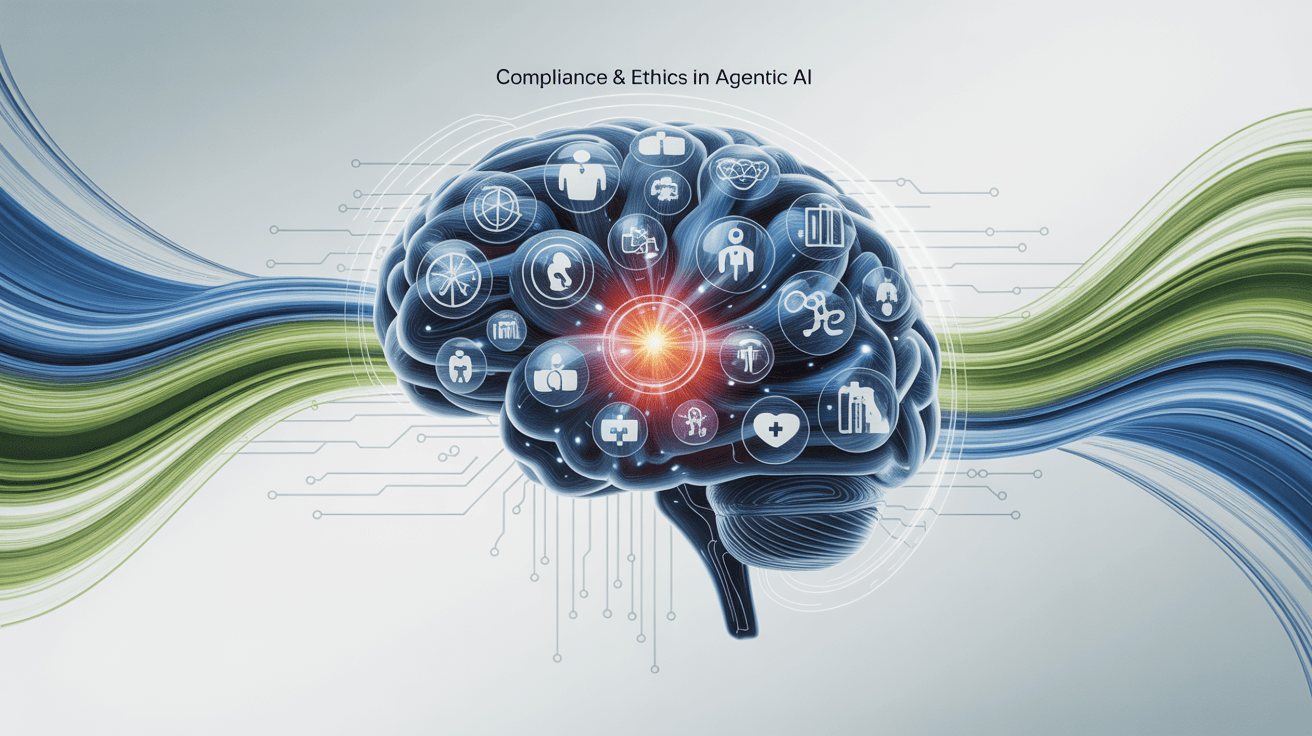
Healthcare deals with sensitive patient data, life-critical decisions, and strict regulations. When AI becomes agentic, meaning, when it can take action: compliance and ethics become even more critical.
1. Compliance risks: Misuse of patient data, HIPAA violations, or unapproved decision-making.
2. Ethical risks: Bias in diagnosis, lack of transparency in decisions, and accountability gaps.
3. Reputation risks: Patients may lose trust if AI-driven decisions feel unsafe or unfair.
Without proper governance, agentic AI solutions can expose providers to lawsuits, regulatory fines, and loss of patient trust.
Key Compliance Challenges for Agentic AI in Healthcare
Here are the biggest compliance concerns healthcare providers must address:
1. HIPAA Compliance
- AI systems must ensure secure handling of Protected Health Information (PHI).
- Agentic AI HIPAA compliance means encryption, access controls, and audit trails for every AI-driven decision.
2. Patient Data Privacy
- Agentic AI models need privacy-by-design architecture.
- Patients should be informed if AI is making recommendations about their care.
3. Regulatory Approvals
- In the US: FDA requires approvals for AI used in diagnostics.
- In the UK: NHS has strict digital health guidelines.
- In the Middle East: Regulations are still emerging, but governments are tightening AI frameworks.
4. Bias & Fairness
- AI trained on biased data can misdiagnose certain populations.
- Ethical frameworks for agentic AI should include bias testing.
5. Accountability & Liability
- Who is responsible if an AI system makes a harmful decision: the hospital, the software company, or the AI itself?
Ethical Frameworks for Agentic AI in Healthcare
To use AI responsibly, healthcare providers need a clear ethical framework. Here are the most critical elements:
1. Transparency: Patients must know when AI is involved in their care.
2. Explainability: AI decisions must be interpretable by doctors and patients.
3. Accountability: A Clear responsibility chain between AI developers, hospitals, and medical staff.
4. Human Oversight: AI should support, not replace, human clinicians.
5. Patient-Centered Care: AI decisions must always prioritize patient well-being
Example: A custom healthcare software development company building agentic AI should bake in ethical guardrails from day one.
Practical Steps to Ensure Compliance & Ethics
Healthcare providers can follow these steps when adopting agentic AI solutions:
1. Risk Assessment
- Map out where AI will interact with patient data.
- Identify HIPAA-sensitive areas.
2. Choose Trusted Vendors
- Work with a custom healthcare software development company that understands HIPAA and regional compliance laws.
3. Implement Data Governance
- Encrypt data, use role-based access, and track AI decision logs.
4. Hire AI Agent Developers with Compliance Expertise
- Developers should know both agentic reasoning models and healthcare IT services regulations.
5. Create an Ethics Review Board
- Similar to Institutional Review Boards (IRBs) for clinical trials, but focused on AI deployment.
6. Continuous Monitoring
- Regularly audit AI for bias, accuracy, and compliance.
Digital Transformation in Healthcare with Agentic AI
Agentic AI is more than just compliance; it’s a driver of digital transformation in healthcare.
1. Operational Efficiency: AI agents can automate scheduling, billing, and claims processing.
2. Clinical Decision Support: Agentic reasoning AI doctor assistants can suggest treatment options based on patient history.
3. Patient Engagement: AI can provide 24/7 health guidance through conversational interfaces.
4. Predictive Analytics: Early detection of chronic diseases through continuous monitoring.
Providers who adopt AI ethically and compliantly will not just avoid fines, they’ll lead in innovation and patient trust.
Regional Considerations: US, UK & Middle East
United States: HIPAA, FDA approvals, state-level regulations.
United Kingdom: NHS Digital frameworks, GDPR compliance.
Middle East (Saudi, UAE, Qatar): Rapidly evolving AI laws, focus on balancing innovation with Shariah-aligned ethical practices.
Takeaway: Compliance rules vary, but the core principle remains the same: patient data and patient trust must always come first.
Future Outlook: What’s Next for Agentic AI Compliance in Healthcare?
AI-first Regulations: Expect stricter AI-specific laws in the next 3–5 years.
Global Standards: WHO and OECD are working toward global AI ethics guidelines.
AI + Human Hybrid Models: Agentic AI will never fully replace doctors, but will serve as a second brain for medical staff.
Key Takeaways & Final Thoughts
- Agentic AI in healthcare enables autonomous decision-making but comes with compliance and ethical risks.
- Healthcare providers must prioritize HIPAA compliance, data privacy, and ethical frameworks to protect patients.
- Partnering with a custom healthcare software development company ensures safe, compliant AI adoption.
- Future-ready hospitals will use agentic AI solutions not just to cut costs but to deliver better patient outcomes.
Agentic AI represents the future of healthcare, but only those who master compliance and ethics will thrive. Hospitals and healthcare providers must act today by investing in secure, ethical, and compliant AI systems to gain patient trust and lead in the era of digital transformation. Contact us to discuss how we can help your organization adopt compliant agentic AI solutions.
FAQs
Q. What is agentic AI in healthcare?
Agentic AI refers to AI systems that can autonomously reason, make decisions, and act in clinical or administrative healthcare settings while requiring strong compliance and ethical safeguards.
Q. Is Agentic AI HIPAA compliant?
Yes, but only if designed with HIPAA-compliant security measures such as encryption, audit trails, and patient consent workflows.
Q. How can healthcare providers ensure ethical use of agentic AI?
By creating ethical review boards, ensuring transparency in AI decisions, and implementing human oversight at every stage.
Q. Should I hire AI agent developers for healthcare solutions?
Yes, you can hire AI agent developers, but ensure they have domain-specific compliance knowledge in healthcare IT and patient data privacy.
Q. What’s the future for agentic AI in the Middle East’s digital healthcare?
Rapid infrastructure growth, unique regulatory requirements, and government-led transformation make the region a promising frontier for agentic AI healthcare solutions.
Q: How safe is agentic AI for patient data?
Safety depends on the implementation. If built with HIPAA-compliant frameworks, encryption, and access controls, agentic AI can be very secure. The problem arises when hospitals adopt generic AI tools without proper healthcare IT safeguards.
Q: What happens if agentic AI makes a wrong medical recommendation?)
This is why human oversight is essential. AI recommendations should always be reviewed by a licensed medical professional. Liability often rests with the hospital or software provider, depending on contractual agreements.
Q: Is agentic AI only for big hospitals, or can small clinics use it too?
Agentic AI is scalable. Small clinics can use AI for scheduling, billing, and patient communication without needing complex systems.