Why Hire Healthcare App Developers?
Vijay Vamja
8-10 mins
The healthcare industry is the quickest to embrace digital transformation, with growing demand for essential tools that handle patient care, clinical workflow optimization, and healthcare service delivery. For enhancing patient outcomes and streamlining operations, the strategic decision to hire healthcare app developer professionals has become critical for success in this competitive landscape.
The Compelling Case for Hiring Professional Healthcare App Developers
Enhanced Workflow Efficiency and Operational Excellence
When you hire healthcare app developer experts, organizations typically experience a 60% improvement in workflows and 55% enhancement in interoperability within the healthcare sector. Professional developers bring specialized expertise that transforms complex healthcare processes into streamlined, user-friendly digital solutions that integrate seamlessly with existing clinical systems.
Healthcare app developers deliver faster and cost-effective solutions compared to in-house development attempts. Unlike common misconceptions about outsourcing costs, hiring specialized developers actually reduces overall expenses while providing feature-rich applications without compromising quality or functionality.
Specialized Expertise and Comprehensive Skill Sets
Professional healthcare developers offer diverse skilled sets that expand business capabilities beyond traditional software development. The pandemic has accelerated the adoption of remote development teams, allowing organizations to access global talent pools and bring varied perspectives to healthcare technology solutions.
When you hire healthcare app developer professionals, you gain access to established IT infrastructure that includes certifications, quality management processes, and robust data security frameworks. This infrastructure encompasses all necessary tools, software, and hardware components, eliminating additional overhead costs for organizations.
Guaranteed Results and Risk Mitigation
Healthcare app developers utilize proven methodologies such as Agile and Scrum approaches to deliver guaranteed results, reducing project failure risk from significant to minimal. These professionals are well-versed in cutting-edge technologies and employ well-defined development approaches to address complex healthcare software challenges.
Professional developers provide excellent post-development support, offering maintenance services and mitigating potential risk factors even after application launch and deployment. This ongoing relationship ensures long-term application performance and reliability.
Essential Healthcare App Development Components
Regulatory Compliance and Security Framework
Healthcare applications must navigate complex regulatory environments, making compliance expertise crucial when you hire healthcare app developer professionals. Key regulatory requirements include:
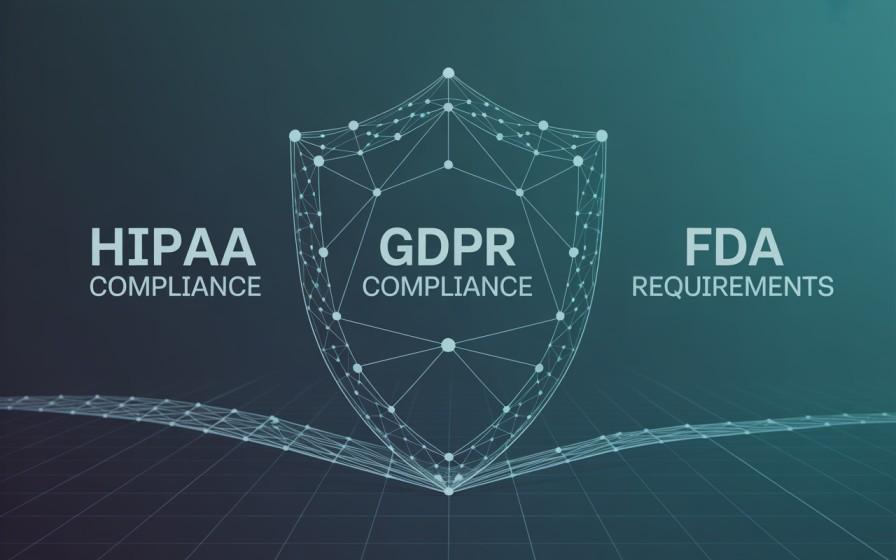
- HIPAA Compliance: Mandatory for applications handling Protected Health Information (PHI) in the United States, requiring implementation of administrative, technical, and physical safeguards. HIPAA compliance can add $5,000 to $25,000 for basic applications, while complex applications may see 20-50% increases in base development costs.
- GDPR Compliance: Essential for applications serving European Union citizens, focusing on user consent mechanisms and comprehensive data rights protection.
- FDA Requirements: Medical device applications require premarket clearance and quality assurance checks, with classification into Class I, II, or III based on risk assessment.
Technical Security Implementation
Professional healthcare developers implement comprehensive security measures including:
- End-to-end encryption using AES-256 for data at rest and TLS protocols for secure data transmission
- Multi-factor authentication (MFA) combining strong passwords with biometric verification or one-time passwords
- Role-based access control (RBAC) ensuring users access only necessary information for their specific roles
- Automated audit trails capturing user activity involving PHI for security monitoring and compliance reporting
Healthcare App Development Workflow and Process
Strategic Planning and Requirements Engineering
The development process begins with comprehensive market research and planning, identifying target audiences including patients, healthcare providers, and administrators. Professional developers create detailed user personas with specific needs, pain points, and goals while considering technical proficiency levels and demographic factors.
Regulatory compliance mapping occurs early in the planning phase, ensuring integration of requirements like HIPAA, GDPR, and regional healthcare data protection laws into the design framework. This proactive approach prevents costly compliance retrofitting during later development stages.
Design and User Experience Optimization
Healthcare app design requires specialized consideration for diverse user bases with varying technical proficiency, physical limitations, and medical conditions affecting technology interaction. Professional developers implement user-centered design principles incorporating:
- Contextual research in clinical environments
- Persona development for diverse healthcare professionals
- Usability testing with real healthcare providers
- Accessibility considerations for patients with various requirements
Compassionate design approaches recognize that healthcare app users may be stressed, in pain, or anxious, requiring interfaces that minimize cognitive burden while providing reassurance.
Development Methodologies and Quality Assurance
Healthcare app developers employ Agile development methodologies particularly effective for healthcare applications due to their dynamic nature. Short sprint cycles enable continuous stakeholder feedback from clinicians and end users who evaluate functionality from medical perspectives.
Regulatory-first development incorporates compliance requirements throughout the development process rather than addressing them retrospectively. This approach includes:
- Privacy by design principles
- Regular security assessments
- Documentation aligned with regulatory submissions
- Validation protocols integrated into testing phases
Essential Features and Functionality
Core Healthcare App Features
Professional developers implement essential features that form the foundation of successful healthcare applications:
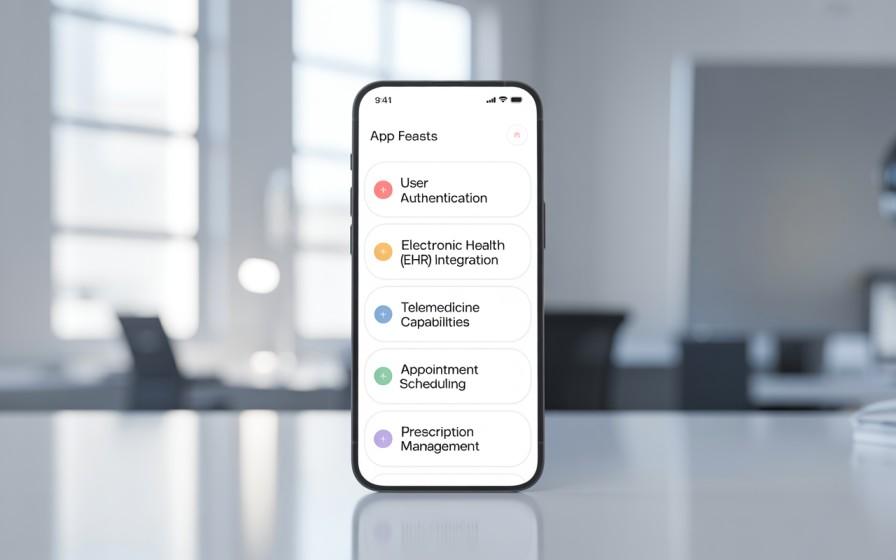
- User Authentication: Secure login and registration processes for patients, doctors, and healthcare professionals with multi-factor authentication capabilities.
- Electronic Health Records (EHR) Integration: Seamless connectivity with existing healthcare systems supporting interoperability standards like HL7 and FHIR.
- Telemedicine Capabilities: Video consultation functionality with secure messaging and file sharing for comprehensive virtual care experiences.
- Appointment Scheduling: Comprehensive booking systems with calendar synchronization and automated reminder capabilities.
- Prescription Management: Digital prescription creation and management with integration to pharmacy systems and medication tracking.
Advanced Integration Capabilities
When you hire healthcare app developer experts, they ensure seamless integration with existing healthcare infrastructure:
- Hospital administration systems
- Laboratory information systems
- Electronic health records platforms
- Wearable device connectivity
This interoperability maintains continuity of care while reducing administrative burden on medical staff.
Technology Stack and Infrastructure
Recommended Technology Framework
Professional healthcare app developers utilize robust technology stacks ensuring functionality, security, scalability, and seamless user experience:
- Frontend Technologies: HTML5, CSS3, JavaScript frameworks including React.js, Angular, and Vue.js for web-based applications; Swift/Kotlin for native mobile development; React Native/Flutter for cross-platform solutions.
- Backend Infrastructure: Cloud-native technologies using AWS or similar platforms supporting HIPAA, GDPR, and HITRUST compliance frameworks. Pay-as-you-go pricing models optimize budget utilization while enabling scalable growth.
- Database Architecture: Encrypted databases with redundancy across multiple servers preventing data loss while maintaining HIPAA compliance requirements.
Integration with Electronic Health Records (EHR)
EHR Integration Benefits and Implementation
EHR integration represents a critical component when you hire healthcare app developer professionals, enabling seamless data exchange and reducing administrative burdens. Successful integration provides multiple benefits:
- For Healthcare Providers: Unified integration layers reduce multiple point-to-point connections, simplifying system management and maintenance. Modular architecture enables faster onboarding of new features and easier scaling across multiple EHR systems.
- For Patients: Seamless data flow ensures consistent user experience with better continuity of care as health apps become trusted components of clinical ecosystems. Real-time data supports personalized and timely care interventions.
Integration Implementation Process
Professional developers follow structured approaches for EHR integration:
- System and Interface Inventory: Reviewing existing platforms including EHR/EMR systems, app backends, device data feeds, and third-party services
- Stakeholder Mapping: Identifying clinicians, IT staff, compliance officers, and product teams to align priorities and secure implementation buy-in
- Use Case Definition: Mapping app features requiring specific clinical data access while ensuring alignment with clinical workflows
- Standards Implementation: Utilizing FHIR, HL7, and CDA protocols with middleware layers for vendor neutrality
Quality Assurance and Testing Framework
Comprehensive Testing Methodologies
Healthcare app quality assurance involves multiple testing dimensions ensuring applications function reliably, securely, and seamlessly:
- Functional Testing: Validates each application function ensuring features perform as intended with cohesive workflow and smooth user interface operation.
- Security Assessment: Evaluates weaknesses preventing data breaches through encryption testing, access restriction validation, and data safeguard verification.
- Performance Testing: Confirms applications can withstand high usage volumes and large datasets without issues, examining speed, reliability, and functionality under pressure.
- Compliance Testing: Ensures adherence to regulations like HIPAA and GDPR governing patient data privacy and security.
- Integration Testing: Examines seamless functionality with electronic health records, diagnostic tools, and other healthcare technologies.
- Accessibility Testing: Verifies usability for individuals with visual, hearing, motor, and cognitive disabilities, adhering to Web Content Accessibility Guidelines.
Quality Assurance Objectives
Healthcare application testing prioritizes:
- Patient Privacy Protection: Rigorous testing ensuring accurate medical data provision and patient record confidentiality
- Application Reliability: Comprehensive testing confirming accurate performance across all scenarios
- Regulatory Compliance: Validation of adherence to healthcare data protection laws and industry standards
Cost Considerations and Return on Investment
Healthcare App Development Investment
Healthcare app development costs vary significantly based on complexity and features, ranging from $50,000 to $450,000+ with development timelines spanning 6 to 40 weeks. Key cost factors include:
Security and Privacy Implementation: Fine-grained RBAC and PHI scoping adds $8,000-$25,000; end-to-end encryption implementation adds $10,000-$30,000; secure UI patterns contribute $5,000-$15,000 to development costs.
HIPAA Compliance Integration: Basic compliance setup ranges from $5,000-$25,000, while complex applications experience 20-50% increases in base development costs.
Calculating Healthcare App ROI
Professional healthcare app development delivers measurable returns through multiple channels:
ROI Formula: ((Total Benefits – Total Costs) ÷ Total Costs) × 100
Benefit Categories:
- Improved Patient Engagement: Enhanced self-management tools and information access
- Increased Efficiency: Streamlined administrative tasks and data management
- Cost Reduction: Decreased hospital readmissions and operational overhead
- New Revenue Streams: Subscription services, paid features, and strategic partnerships
Current Healthcare App Development Trends
Emerging Technologies and Market Trends
The healthcare app development landscape in 2025 showcases several transformative trends when you hire healthcare app developer professionals:
- Telemedicine Integration: Continued growth providing real-time patient-doctor access for preventive care and emergency response.
- 5G-Enabled Applications: Network latency reduction of 80% compared to 4G, enabling speeds of 1-10 Gbps for instant high-volume data sharing and real-time health monitoring.
- Digital Therapeutics (DTx): Market expected to reach $10.09 billion by 2029 with 10.21% CAGR, utilizing AI architectures and high-frequency data analytics for precision medicine.
- AI and Machine Learning Integration: Enhanced diagnostic capabilities, predictive analytics, and personalized treatment recommendations.
5G Implementation Considerations
Healthcare organizations preparing for 5G adoption should consider:
- Optimizing applications for higher bandwidth usage through efficient data compression
- Implementing adaptive bitrate streaming for consistent performance
- Integrating robust encryption protocols like TLS 1.3 for secure rapid data transmission
- Ensuring compatibility with edge computing for reduced latency and real-time analytics
Strategic Advantages of Remote Healthcare Development Teams
Global Talent Access and Flexibility
Remote healthcare app development provides organizations with access to highly skilled, experienced, and qualified healthcare engineers while maintaining 100% project success rates and reduced development costs. Geographic diversification offers suitable coverage for North America, Europe, and Asia Pacific regions with advantageous time zone compatibility.
Flexible Engagement Models: Organizations can hire developers on hourly, weekly, or monthly bases, allowing resource scaling based on project requirements without long-term commitments. This approach offers greater flexibility for meeting specific business objectives while maintaining cost efficiency.
Infrastructure and Communication Benefits
Professional remote development teams provide:
- Comprehensive communication sources maintaining contact with developers and management teams
- Great work environments with healthcare app development infrastructure for smooth, efficient software development
- On-time project delivery with dedicated professionals focused exclusively on client projects
- Competitive fixed pricing without hidden charges
Customization and Specialized Solutions
Tailored Healthcare Applications
Healthcare app developers create customized solutions for specified requirements that generic applications cannot address. Healthcare organizations frequently have particular needs related to specific patient demographics, clinical procedures, and operational workflows.
Professional developers incorporate specialized functionalities including:
- Appointment scheduling systems integrated with existing clinical calendars
- EHR access capabilities enabling comprehensive patient data management
- Telemedicine platforms supporting various consultation modalities
- Chronic disease management tools for specific patient populations
Industry-Specific Expertise
When you hire healthcare app developer professionals, organizations benefit from domain-specific knowledge encompassing:
- Clinical workflow understanding ensuring applications align with medical practice requirements
- Healthcare regulation expertise maintaining compliance across multiple jurisdictions
- Medical terminology proficiency enabling accurate communication with healthcare stakeholders
- Patient safety protocols integrated throughout application development and deployment
Conclusion: Making the Strategic Decision
The decision to hire healthcare app developer professionals represents a strategic investment in organizational digital transformation and patient care enhancement. Professional healthcare developers bring essential expertise in regulatory compliance, security implementation, system integration, and user experience optimization that internal teams often lack.
With healthcare app development costs ranging from $50,000 to $450,000+ and the potential for significant ROI through improved efficiency, reduced operational costs, and new revenue streams, partnering with experienced healthcare app developers ensures successful project outcomes while minimizing technical and regulatory risks.
Organizations investing in expert healthcare app development position themselves for long-term success in the digital healthcare ecosystem while delivering enhanced patient care and operational excellence.
Frequently Asked Questions
Q. Why should I hire professional healthcare app developers?
Hiring expert healthcare app developers ensures regulatory compliance, robust security, and advanced functionality for clinical and patient-facing applications.
Q. How do healthcare app developers improve workflow efficiency?
They create interoperable apps that integrate EHR systems, automate administrative tasks, and streamline patient management for 60% faster workflows.
Q. Are healthcare app developers experienced with HIPAA compliance?
Yes. Professional developers design HIPAA and GDPR-compliant solutions, implementing advanced encryption, audit trails, and secure data workflows.
Q. What is the typical cost to hire healthcare app developers?
Healthcare app development costs range from $50,000 to $450,000+, depending on complexity, integrations, and regulatory compliance needs.
Q. What technologies do healthcare app developers use?
They specialize in React, Flutter, Swift, AWS Cloud, FHIR, and HL7 standards, enabling secure, scalable, and interoperable healthcare applications.