5 Signs Your Clinic Needs AI to Handle Growing Patient Demand
Vijay Vamja
3-4 mins
The growing patient volumes are a critical reality in the healthcare industry; however, the numerous AI adoption trends are turning these challenges around. Clinics can no longer rely solely on manual workflows, traditional scheduling, and legacy EHR systems, making it highly essential to consider the AI-powered transformation in healthcare.
Understanding Growing Patient Demand
- The outpatient clinics market is set to hit $6.3 trillion globally by 2029.
- Patient volumes are up: 46% of medical groups report 2024 visit volumes are above last year's levels.
- AI is already used by 35% of US healthcare providers, up from 30% in 2023.
| Year | AI Adoption Rate (%) | Outpatient Market Size ($T) | Clinic Visit Volume Change (%) |
|---|---|---|---|
| 2023 | 30 | $4.4 T | +31% |
| 2024 | 35 | $6.3 T | +36% |
Sign #1: Chronic Appointment Overflows & No-Shows
The Hidden Costs of Overflow
- Clinics experience 20–30% variation in patient demand year-round, leading to frequent overbooking and no-shows.
- No-shows and overbookings not only waste resources but also lead to patient dissatisfaction and revenue loss.
How AI Solves It
- AI-driven predictive scheduling automatically forecasts busiest slots, holds openings for high-need patients, and updates appointments in real time—all while reducing staff stress.
- AI chatbots and virtual assistants bring 24/7 scheduling, minimizing manual errors and friction.
Sign #2: Staff Burnout & Operational Bottlenecks
Why Labor Costs Spiral
- Staff shortages can trigger burnout, errors, and delays.
- Overstaffing raises costs, while understaffing risks patient safety.
AI Solution
- AI-powered demand forecasting enables clinics to optimize staffing levels daily, cutting costs by up to 10% and protecting care quality.
- Automation platforms like n8n integrate HR, schedules, and EHRs - eliminating repetitive data entry and freeing clinical staff for high-value tasks.
| Challenge | AI Solution | Impact |
|---|---|---|
| Burnout | AI demand forecasting | Up to 10% labor cost savings |
| Over/Understaffing | Smart resourcing via AI & n8n | Improved continuity, morale |
Sign #3: Missed Follow-Ups and Low Continuity
Manual Systems Can't Scale
- Clinics adopting telemedicine and outpatient models run into gaps in remote follow-up and ongoing care.
AI Solution
- AI-powered patient engagement tools automate reminders, follow-ups, and symptom triage.
- Clinics using automation with n8n and custom software report major reductions in missed appointments and improved continuity of care.
- Medical AI chatbots handle routine patient queries, freeing up human teams for complex cases.
Sign #4: Data Floods & Inefficient EHR Integration
The Reality of Data Silos
- With EHRs, billing, lab results, and telemedicine data flowing in, clinics struggle with unconnected systems and data errors.
AI Solution
- AI-driven custom software can securely aggregate records, ensure HIPAA/GDPR compliance, and enable seamless analysis for clinical decision-making.
- n8n's node-based workflows allow for rapid integration and automation of legacy EHRs with modern tools, reducing human error and manual workload.
Read more: How to Integrate N8N with EHR System
| Tech Painpoint | n8n/Custom AI Solution | Result |
|---|---|---|
| Siloed Data | AI/n8n integration & automation | Centralized, actionable data |
| Compliance Burdens | Custom software security features | Easier audits, risk reduction |
Sign #5: Slow Intake and Diagnosis Processes
Patients Expect Fast, Personalized Care
- Clinics often process new patient information and diagnostics manually, causing delays.
AI Solution
- AI-driven intake solutions use NLP to interpret symptoms, route patients to the right department, and automatically book appointments using workflow platforms like n8n, Google Calendar, and EHRs.
- Custom Agentic AI solutions enable clinics to assess and prioritize at a glance, speeding triage and diagnostics for time-sensitive cases.
Real World Transformation: Success Stories & Market Trends
Adoption Shifts
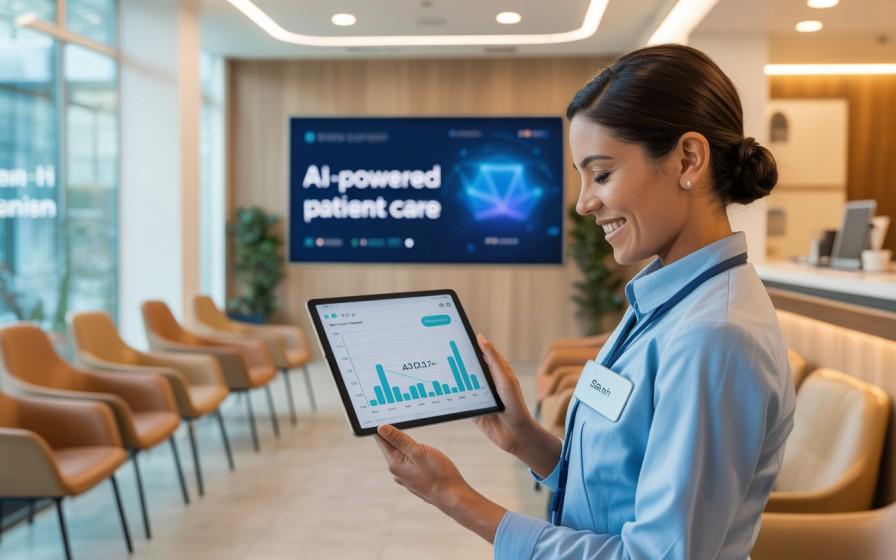
- Major clinics like Mayo Clinic and Cleveland Clinic integrate AI to optimize operational efficiency, reduce bottlenecks, and improve patient satisfaction.
- 66% of physicians now use some form of AI-supported decision-making in practice, up from 38% last year.
| Clinic Type | Adoption Trend | Benefit |
|---|---|---|
| Outpatient | Telemedicine + AI | Efficiency, lower costs |
| Specialty Centers | Predictive AI triage | Better resource planning |
AI Healthcare Solutions Your Clinic Needs NOW
Why do Clinics Need Custom Software & Automation?
- Off-the-shelf solutions rarely fit the unique workflows or compliance needs of growing clinics.
- Custom-built software ensures integration with every tool: EHRs, telehealth, billing, patient engagement, and more.
Benefits of Hiring AI Developers & n8n Experts
- AI developers can design tailored models and automations suited to your clinic's scale and specialties.
- Expert n8n developers build secure, automated workflows (appointment booking, intake, billing, reporting), ensuring cost-effective operations and fast scalability.
- Self-hosted n8n setups protect data, comply with privacy regulations, and reduce total cost compared to SaaS platforms.
Next Steps: How to Solve Growing Patient Needs
- Audit patient demand trends: Use AI to analyze historic, seasonal, and specialty-specific demand.
- Automate intake, triage, and scheduling: Implement n8n-powered AI workflows for instant appointment booking and smart department routing.
- Integrate remote care tools: Build custom modules for telemedicine, EHRs, and real-time patient follow-up.
- Hire skilled AI Agents/n8n developers: Accelerate ROI and risk reduction by working with professionals experienced in medical workflow automation.
- Monitor compliance: Leverage automation for continuous audit trails, HIPAA/GDPR compliance, and cybersecurity.
Conclusion: Why AI-Driven Clinics Will Win
Clinics that embrace AI and custom automation raise patient satisfaction, reduce operational drag, and future-proof their business as patient demand grows. Whether through custom software, dedicated n8n developers, or advanced workflow platforms, the message is clear: AI is now an essential prescription for growing clinics.
Ready to future-proof your clinic's workflows?
Partner with Ciphernutz IT Services for innovative AI and custom software solutions, tailored for clinics, hospitals, and healthcare systems.