AI in Home Healthcare: Transforming IV Therapy, Hospice, and Elderly Care
Vijay Vamja
12-14 mins
The home healthcare industry is finally witnessing what it means to receive compassionate, personalized care in the comfort of one's own home. But, is achieving a record-breaking growth of about $381.40 billion at a projected 48.5% CAGR by 2032 realistic? Indeed. AI implementations are fundamentally evolving how patient care is delivered.
The transformation is particularly evident across three critical areas: intravenous therapy, hospice care, and elderly care services. As for addressing the persistent industry challenges in home healthcare, let's see what adding AI does about problems like workforce shortages & rising operational costs.
This blog will unpack everything you need to know about the rising developments with AI in home healthcare.
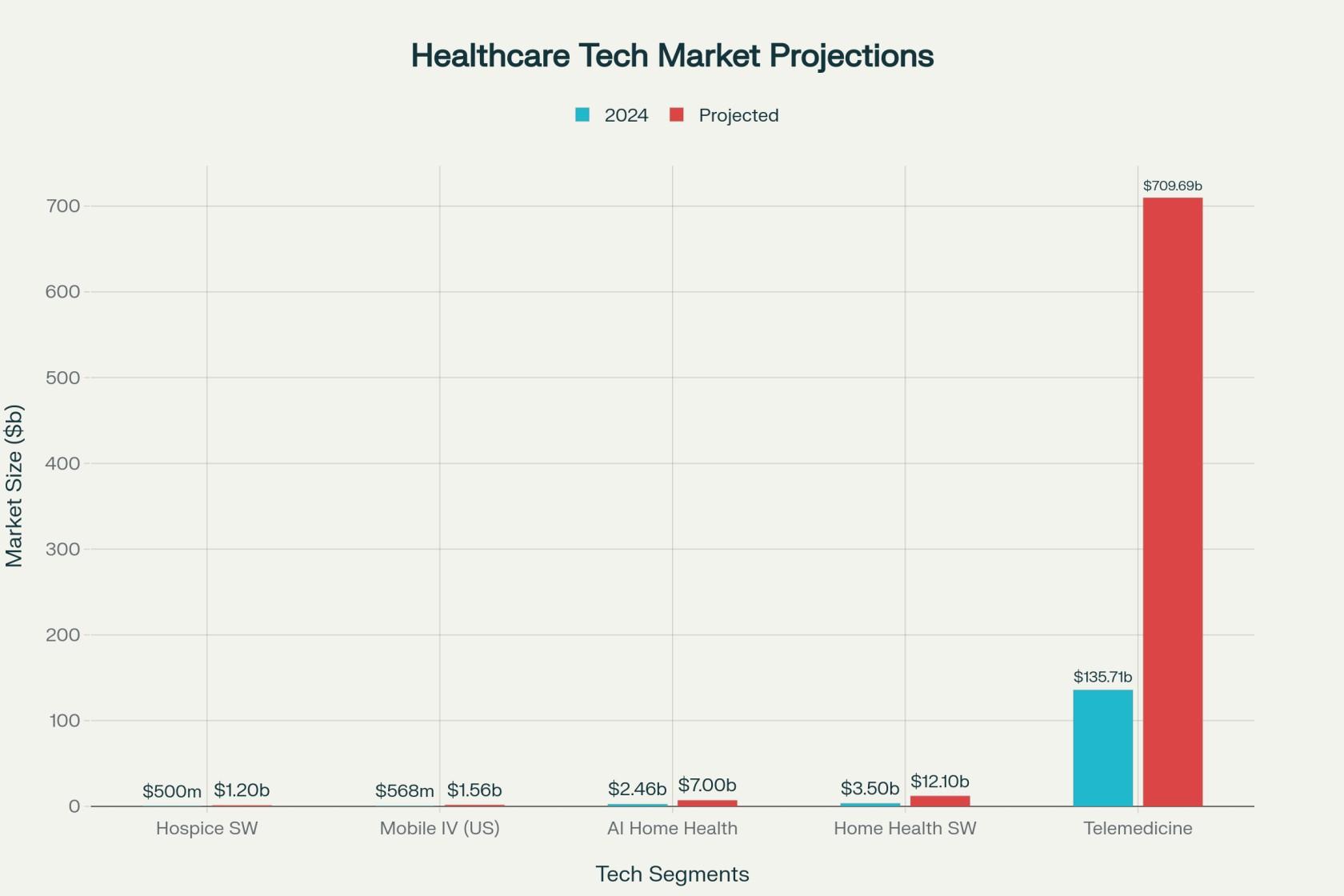
Home Healthcare Technology Market Growth Projections (2024 vs 2030-2034)
How Future Healthcare Technology is Elevating At-Home Care
1. The Human-Centered Technology Revolution
Modern AI-powered healthcare technology recognizes that every patient's journey is unique. AI-powered systems, therefore, learn individual patterns, preferences, and needs, creating care experiences that feel more like devoted caregivers who know what's essential.
| Receive Personalized Care That Adapts to Life
One resident named Barbara, living with dementia, engaged with an AI companion called Kathy for hours each day. The technology didn't just provide reminders or monitor vital signs - it sang songs, shared stories, and offered genuine companionship that lifted Barbara's mood and reduced her anxiety. Ultimately, it reduced the need for staff interventions while increasing her quality of life.
| Breaking Down Barriers to Care Access
Advanced telemedicine platforms are eliminating geographic and mobility barriers that have traditionally separated patients from accessing specialized care. Rural families who once faced impossible choices between relocating or going without care are now having access to world-class specialists through their smartphones and tablets.
2. Technology That Preserves Dignity and Independence
Modern healthcare technology is designed with a fundamental understanding: independence is not just a preference, it's essential to human dignity. Smart home systems enable elderly patients to maintain their routines and autonomy while providing invisible safety nets that activate only when needed.
| Intelligent Environmental Adaptation
- Smart lighting systems that adjust to circadian rhythms, promoting better sleep and emotional well-being.
- Temperature controls that respond to health conditions and comfort preferences.
- Voice-activated systems that provide companionship and emergency assistance without feeling intrusive.
| Technology Impact | Patient Benefits | Family Benefit |
|---|---|---|
| Predictive Health Monitoring | Early intervention prevents crises | Reduced anxiety about loved one's safety |
| Voice/Gen AI/ Conversational AI Companionship | Decreased isolation & depression | Peace of mind during work hours |
| Automated Medication Management | Improved adherence and safety | Less worry about missed doses |
| Fall Detection Systems | Faster emergency response | 24/7 protection without constant supervision |
Read more: Voice AI vs Conversational AI
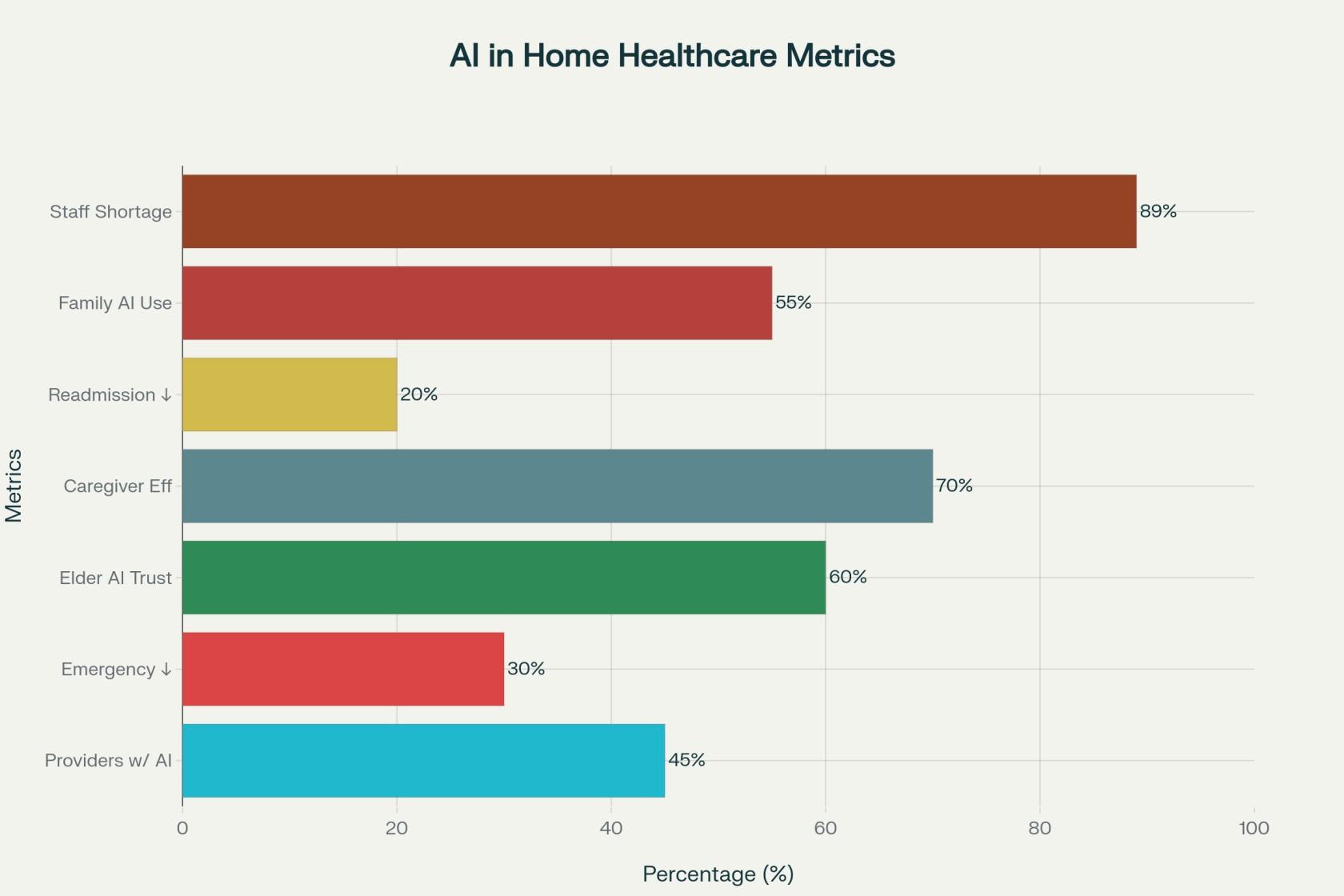
AI Adoption Rates and Impact Metrics in Home Healthcare (2024-2025)
How is Modern AI Technology Transforming Healthcare at Home
The developments happening in home healthcare with AI today represent a shift from reactive to proactive, from impersonal to deeply personalized, and from isolated to connected care experiences.
1. Emotional Intelligence Meets Medical Expertise
Modern healthcare technology incorporates specially trained AI that recognizes when patients are anxious, frustrated, or in distress. These systems or AI agents don't just respond to medical data - they respond to the human being behind the numbers.
| Realtime Empathy In Action
When an elderly patient calls their healthcare provider sounding stressed about their medication regimen, the conversational AI can detect the distress in their voice. It will then immediately connect them with a specially trained human counselor rather than routing them through standard phone systems. This technology ensures that vulnerable moments receive human compassion, not automated responses.
2. Transforming Care Relationships
| Empowering Caregivers to Focus on What Matters Most
At Pinnacle Home Care, AI-powered documentation systems reduced start-of-care time from 119 minutes to 87.3 minutes. This isn't just about efficiency - it's about giving clinicians more face-time with patients. As one chief clinical officer explained, "Nobody wants to sit behind a clinician as they're typing on a computer."
|Creating Invisible Support Networks
Technology now creates seamless communication between patients, families, and care teams. When 78-year-old Helen experiences irregular heart rhythms at 2 AM, her wearable device doesn't just sound an alarm; instead, it quietly notifies her physician.
What's better is the conversational AI network in agentic home care systems updates her family with reassuring information, and initiates appropriate interventions without disrupting her sleep unless absolutely necessary.
3. Predictive Care That Prevents Crises
Another profound transformation in home healthcare with AI is the ability to anticipate needs before they become emergencies. AI systems analyzing patient data can predict health deterioration with 78% accuracy, enabling interventions that prevent hospital readmissions and keep families together.
Case Study: Preventing Hospital Readmission
A pilot program that uses AI to develop personalized care plans for home-based patients with heart failure reduced hospitalization rates by 30%. More importantly, it allowed patients to maintain their independence and remain in familiar surroundings during recovery.
AI in Home Health Care Examples
IF the case studies and data may seem passable, consider these real-world implementations of AI in home healthcare. The stated AI implementations in home healthcare demonstrate how easier it becomes to support lives in measurable, meaningful ways.
1. Transformational Patient Stories
- Homewatch CareGivers: Preventing Falls, Preserving Lives
During their AI pilot program for fall prevention among seniors, Homewatch CareGivers achieved a 33% reduction in hospitalizations. The technology uses non-intrusive monitoring to detect changes in movement patterns and respiration that might indicate increased fall risk.
One client initially worried about privacy invasion, but the peace of mind the system provided to both her and her adult children transformed their entire family dynamic. Instead of constant worry, they could focus on enjoying time together.
- Pinnacle Home Care: Revolutionizing Clinical Documentation
Clinicians using AI-powered documentation tools can now provide real-time, higher-quality patient visits. The technology serves as a personal assistant, providing critical patient information during drive time between visits, ensuring every interaction is informed and purposeful.
2. Measurable Impact on Quality of Life
- University of Rochester Medical Center: Expanding Access to Imaging
By providing 862 Butterfly IQ AI-powered ultrasound probes to medical students and practitioners, URMC achieved remarkable results:
- 116% increase in ultrasound charge capture
- 74% increase in scanning sessions
- Enhanced diagnostic accuracy for conditions like cholecystitis
- OSF Healthcare: AI Virtual Care Navigation
The AI assistant "Clare" of the OSF Healthcare transformed how patient accesses care, achieving:
- $1.2 million in contact center savings
- $1.2 million increase in annual patient net revenue
- Improved patient satisfaction through 24/7 availability
3. Chronic Disease Management Success
AI-powered wearable devices and mobile applications for chronic disease management have shown remarkable outcomes:
- Patients with diabetes and heart disease experience improved control over their conditions
- Fewer episodes of acute exacerbations
- Reduced frequency of hospital visits and emergency care needs
- Higher quality of life and better treatment compliance
4. Remote Patient Monitoring Breakthrough
A pioneering RPM startup leveraging machine learning algorithms to monitor vital signs achieved:
- Detection of subtle changes indicating potential clinical events
- Timely interventions by physicians and caregivers
- Significant cost savings by preventing prolonged hospital stays
- Improved patient outcomes through continuous monitoring
Understanding the Role of AI in Home Health Care
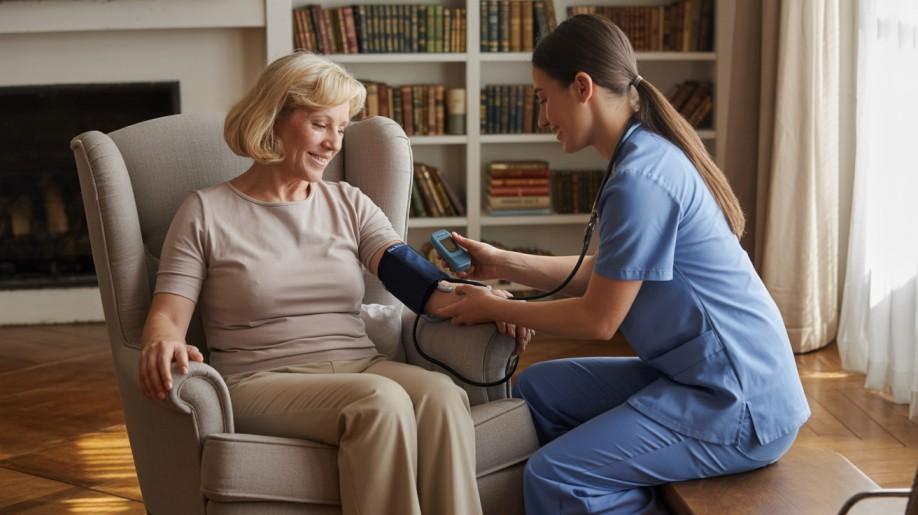
Implementing generative and agentic AI solutions serves multiple crucial roles in home healthcare, each designed to enhance the human experience of receiving and providing care
1. The Guardian: Continuous Health Monitoring
AI acts as a vigilant guardian, continuously monitoring patients without the intrusive feeling of constant surveillance. Smart sensors and wearable devices track vital signs, activity levels, and behavioral patterns, creating a comprehensive picture of patient health.
| Invisible Protection, Visible Results
- 70% reduction in hospital readmissions through AI remote monitoring
- 30% decrease in emergency calls via AI virtual assistants
- 25% improvement in fall detection accuracy
2. The Companion: Addressing Isolation and Loneliness
Perhaps AI's most profound role is serving as a companion for patients who might otherwise face isolation. AI companions like Kathy provide conversation, memory exercises, and emotional support to dementia patients, with measurable impacts on anxiety, mood, and overall well-being.
| The Emotional Connection
Over 65 days, 18 residents aged 70-90 spent an average of 48 minutes daily with their AI companion. The technology doesn't just respond - it remembers previous conversations, sings familiar songs, and tells personalized stories that bring comfort and joy.
3. The Translator: Making Healthcare Accessible
AI breaks down the communication and knowledge barriers, translating complex medical information into understandable language and helping patients navigate their care options confidently. This role is particularly crucial for elderly patients or those with cognitive impairments who might struggle with traditional healthcare communication.
4. The Predictor: Anticipating Needs
AI's predictive capabilities represent perhaps its most valuable role, i.e., anticipating patient needs before they become crises:
- Medication adherence monitoring with 85% accuracy in AI chatbot reminders
- Health deterioration prediction with 78% accuracy, enabling proactive interventions
- Emergency intervention reduces response times and prevents complications
AI Transformation in IV Therapy: Smart and Predictive Analytics
1. Revolutionizing Intravenous Care Delivery
The mobile IV therapy market, growing from $568.25 million in 2024 to $1.56 billion by 2034, represents more than market expansion; it embodies a fundamental shift.
The best part?
It's geared toward extending convenient, personalized wellness solutions that meet patients where they are.
- Smart IV Pump Technology: Precision with Compassion
The global IV smart pump market, projected to reach $11.5 billion by 2033, focuses on eliminating the anxiety and uncertainty that traditionally accompany IV therapy.
These intelligent systems provide:
Automated Safety Assurance
- Dose Error Reduction Systems minimize human error while maintaining the human touch in care delivery
- Real-time monitoring provides peace of mind to both patients and families
- Wireless connectivity enables remote oversight without feeling intrusive
Patient-Centered Experience Enhancement
Smart IV systems create a more comfortable, reassuring experience:
- Continuous monitoring reduces the need for frequent interruptions
- Predictive alerts prevent complications before they cause discomfort
- Integration with patient management platforms ensures coordinated, comprehensive care
2. Predictive Analytics: Preventing Complications, Preserving Peace
The AI-powered predictive analytics in IV therapy transform reactive treatment into proactive care management. By analyzing patterns in vital signs, medication response, and historical patient data, these systems anticipate complications hours or even days before they might occur.
Life-Changing Impact Metrics
- 70% reduction in hospital readmissions using AI remote monitoring platforms
- 30% improvement in cost savings by preventing complications
- Significant reduction in patient anxiety through predictive intervention communication
Revolutionizing Hospice Care Through AI Integration
1. Preserving Dignity in Life's Final Journey
The AI-powered hospice software market's growth from $500 million in 2024 to $1.2 billion by 2033 reflects society's growing recognition. It is primarily about end-of-life care, deserving the most compassionate, personalized approach technology can provide.
AI Applications That Honor Life
| Personalized Comfort and Care Planning
AI systems analyze not just medical data, but personal preferences, family dynamics, and individual expressions of comfort to create care plans that honor each person's unique journey:
- Pain management optimization that adapts to individual responses and preferences
- Symptom pattern recognition that enables proactive comfort measures
- Family communication enhancement that keeps loved ones connected and informed
| Predictive Compassion in End-of-Life Care
Advanced AI models can identify patients likely to be in their final week of life, enabling healthcare teams to:
- Ensure appropriate resources and support are available during critical periods
- Provide families with gentle, compassionate preparation and guidance
- Focus on quality of life and comfort rather than reactive medical intervention
2. Transforming the Hospice Experience
ROI Measured in Human Terms
- 97% increase in patient visits achieved through AI optimization
- Significant reduction in administrative burden, allowing more time for human connection
- Enhanced ability to fulfill individual wishes and preferences during end-of-life care
3. Supporting Families Through Technology
AI systems today help families navigate the complex emotions and decisions of end-of-life care by being useful, with care. They provide clear information, gentle reminders, and connections to support resources when they're needed most.
Transforming Elderly Care with Intelligent Technologies
1. Aging with Dignity and Independence
With AI-powered devices, technology is becoming an essential partner in preserving independence and dignity for aging adults.
- 60% of elder care organizations agree that AI significantly improves patient monitoring.
- 55% of family caregivers already use AI-powered devices.
2. AI-Powered Monitoring That Respects Privacy
| Invisible Safety Nets
Modern elderly care AI systems operate with respect for privacy and autonomy while providing comprehensive protection:
- Pattern recognition detects subtle changes in daily routines without invasive surveillance
- Early intervention alerts notify appropriate parties only when necessary
- Chronic disease management provides gentle guidance and support for medication adherence and lifestyle choices
3. Smart Homes That Adapt to Changing Needs
| Technology That Learns and Cares
Intelligent home environments evolve with residents' changing capabilities:
- Automated safety features activate seamlessly without feeling institutional
- Voice-activated assistance provides companionship and emergency support that feels conversational rather than clinical
- Activity monitoring tracks wellness patterns while respecting personal privacy
4. Measurable Improvements in Quality of Life
Evidence of Transformation
- 30% reduction in hospital readmissions through AI-powered monitoring
- 50% decrease in emergency room visits with predictive intervention systems
- 77% improvement in successful aging-in-place outcomes
- 40% reduction in emergency calls through AI virtual health assistants
How Nurse Management Systems Solve These Challenges
A nurse management system centralizes all operations in a digital platform, addressing common pain points while improving efficiency and patient outcomes:
1. Automated Scheduling
NMS tools optimize nurse schedules based on location, availability, and patient needs. Automated alerts and reminders reduce missed visits. Learn how nurse scheduling software can improve workflow.
2. Centralized Patient Records
A unified platform stores patient history, care plans, medication schedules, and visit notes, ensuring accurate and accessible information for all caregivers. Agencies can consider custom healthcare software solutions for seamless integration.
3. Compliance Tracking
Built-in features ensure regulatory compliance, including HIPAA guidelines, automated reporting, and audit trails, reducing legal risks. Case studies like How IV Therapy Clinic Cut Intake Time show the tangible benefits.
4. Real-Time Communication:
Integrated messaging and notifications enable instant collaboration between nurses, supervisors, and patients. AI-powered systems can further enhance communication and decision-making.
5. Analytics and Reporting:
NMS platforms generate performance metrics, nurse productivity reports, and care quality insights to guide informed decision-making. For agencies looking to scale quickly, MVP development services for startups can help test and implement these solutions efficiently.
Integrating AI in Nurse Management Systems
AI is increasingly shaping nurse management systems by providing predictive insights and automating critical tasks:
- Predictive Analytics: AI predicts patient health events, staffing needs, and optimal visit timings.
- Decision Support: AI-driven suggestions help nurses and supervisors make data-backed care decisions.
- Automation of Repetitive Tasks: Scheduling, reminders, and documentation can be automated, saving time and reducing human error.
- Enhanced Data Accuracy: AI helps identify anomalies in patient records or scheduling, improving overall system reliability.
The Market Opportunity: A Data-Driven Perspective
Growth Driven by Human Need
The remarkable growth projections across all home healthcare technology segments reflect something greater than just market opportunity. Society is today recognizing and accepting technology's power to preserve dignity, independence, and quality of life.
| Market Segment | 2024 Value | Projected Value | Growth Driver |
|---|---|---|---|
| AI in Home Healthcare | $2.46B | ~$7B by 2032 | Demand for personalized, proactive care |
| Mobile IV Therapy (US) | $568.25M | $1.56B by 2034 | Convenience-based wellness preference |
| Hospice Software | $500M | $1.2B by 2033 | Focus on dignified end-of-life care |
| Telemedicine | $135.71B | $709.69B by 2034 | Accessibility and comfort preference |
Demographics of Compassion
| The Human Story Behind the Numbers
- The U.S. population aged 65 and older increased by 3.1% to 61.2 million in 2024
- 89% of home care agencies defer accepting new patients due to workforce shortages
- 45% of home care providers have integrated AI tools, with 80% planning increased investment
Implementation Roadmap for Meaningful Transformation
AI-driven home healthcare transformation succeeds when human needs and ethical standards guide every step. The roadmap begins with careful assessment and stakeholder engagement, followed by incremental pilot programs that measure real-world impact.
Collecting and analyzing ongoing feedback & adaptation additionally ensures that every integration & technology works as intended, actively enhancing the quality of life for patients and families.
Phase 1: Understanding Human Needs (Months 1-2)
- Compassionate Assessment: Understanding not just operational needs, but patient values and family concerns
- Dignity-Centered Planning: Ensuring technology enhances rather than replaces human connection
- Success Metrics Definition: Measuring quality of life improvements alongside operational efficiency
Phase 2: Pilot Programs That Honor Humanity (Months 3-4)
- Patient-Centered Selection: Choosing workflows that most directly impact patient comfort and dignity
- Family Involvement: Including loved ones in technology education and comfort with new systems
- Staff Empowerment: Training teams to use technology as a tool for enhanced human care
Phase 3: Full Implementation with Heart (Months 5-8)
- Gradual Integration: Respecting patient adaptation timelines and preferences
- Continuous Feedback: Regular check-ins focused on patient satisfaction and family comfort
- Human-Tech Balance: Ensuring technology amplifies rather than replaces human compassion
Phase 4: Advanced Care Enhancement (Months 9-12)
- Predictive Compassion: Using AI insights to anticipate and meet emotional as well as medical needs
- Personalized Experiences: Creating truly individualized care experiences based on AI learning
- Family Peace of Mind: Demonstrating measurable improvements in patient outcomes and family satisfaction
Future Trends: Intelligent Technology Serving Humanity
Looking ahead, AI in home healthcare is poised to amplify human dignity, compassion, and connection as it evolves. Emerging technologies, from conversational AI to augmented reality to agentic healthcare systems, promise not only smarter care, but deeper, more meaningful relationships and experiences.
By centering innovation around well-being and empathy, the future of at-home healthcare will enrich lives and elevate patient comfort to new heights.
Emerging Technologies with Better Intelligence
- Advanced AI Companions
Future AI systems will provide even more sophisticated emotional support, capable of maintaining long-term relationships with patients and adapting to changing emotional and cognitive needs.
- Augmented Reality for Family Connection
AR technologies will enable families separated by distance to share meaningful experiences with elderly relatives, from virtual holiday dinners to interactive memory-sharing sessions.
- Predictive Wellness Rather Than Illness
Future AI will focus not just on preventing disease, but on actively promoting wellness, happiness, and quality of life through personalized recommendations and interventions.
Ciphernutz: Your Partner in Compassionate Care Technology
While the transformation focuses firmly on enhancing human dignity and improving patient outcomes, the technical foundation enabling these remarkable changes requires expertise in custom software development and AI integration.
At Ciphernutz, we specialize in creating the technological infrastructure that makes compassionate care possible. Our custom software development, AI integration services, and n8n workflow automation solutions provide the foundation for healthcare organizations to implement these transformative technologies while maintaining focus on what matters most - 'the human experience.'
Our approach prioritizes patient dignity, family peace of mind, and caregiver empowerment, ensuring that every technological solution serves the fundamental goal of better, more compassionate care.
Conclusion: Technology in Service of the Human Spirit
The AI implementations in home healthcare are redefining compassion and connection, placing human dignity at the center of every interaction. As AI enhances IV therapy, hospice, and elderly care, it amplifies real relationships and restores independence. With Ciphernutz’s Generative AI development services, make technology a true partner in delivering meaningful care and elevating lives.
Frequently Asked Questions
Q. How does AI maintain the human touch in healthcare?
AI enhances rather than replaces human connection by handling routine tasks, freeing caregivers to focus on emotional support and meaningful patient interactions. Systems like emotional AI recognize when patients need human compassion and ensure those needs are met.
Q. What privacy protections exist for AI-powered home healthcare?
Modern AI healthcare systems use advanced encryption, HIPAA-compliant data handling, and privacy-by-design principles. Many systems operate on closed networks with strict access controls, ensuring patient data remains secure while enabling effective care.
Q. Can elderly patients really adapt to AI healthcare technology?
Yes, when designed with empathy and implemented gradually. Success stories show that elderly patients often embrace AI companions and monitoring systems when they experience the benefits of increased independence and family peace of mind.
Q. How quickly do families see improvements with AI-powered care?
Many families report immediate improvements in peace of mind and communication, with measurable health outcomes typically visible within 3-6 months. The most significant long-term benefits, like reduced hospitalizations and improved quality of life, will appear over 6-12 months.
Q. What happens when AI systems detect emergencies?
Modern AI systems are designed to balance rapid response with patient dignity. They typically notify appropriate healthcare providers and family members while providing calm, reassuring communication to patients, ensuring help arrives quickly without causing unnecessary panic.