How Medical Vision-Language Models (VLM) Are Helping Clinicians See More Clearly
Vijay Vamja
7-8 mins
Computer vision and natural language processing in healthcare has achieved a milestone with Medical Vision-Language Models (VLMs). These systems now help the healthcare industry process, interpret, and act upon complex medical information. VLMs also hold the potential to empower healthcare professionals in achieving high diagnostic accuracy, operational efficiency, and patient care quality.
Yet, for all the tall claims, is it enough to integrate visual medical data with clinical reasoning capabilities?
Apparently, yes. The medical VLMs have arrived after years of reliance on traditional single-modality AI systems. Newer comprehensive multi-modal platforms can today simultaneously analyze medical images, understand clinical context, and generate meaningful insights on-demand with multi-lingual capabilities.
Such advancements are helping healthcare systems worldwide to see medical conditions with enhanced clarity and reason through complex diagnostic scenarios with remarkable precision. Ultimately, patient outcomes across medical specialities are being revolutionized with VLMs. Let's explore how exactly they help the healthcare industry see and reason better.
The Technological Foundations of VLMs
1. Advanced Multi-Modal Architecture
The medical vision-language models operate via architectures that combine state-of-the-art computer vision capabilities and advanced natural processing systems. These models typically employ transformer-based architectures that enable effective learning from diverse medical data sources. The following are a few examples:
- Radiological images - CT scans, MRIs, X-rays, and ultrasound imagery
- Pathology slides - Histopathological specimens and microscopic analysis
- Clinical notes - Physician documentation and patient records
- Electronic health records - Comprehensive patient data integration
The foundational technology empowering these systems include multiple critical components working in harmony:
Vision Encoders
- Process medical images using specialized architectures trained on extensive medical imaging datasets
- Extract meaningful visual features specific to medical contexts
- Maintain high-resolution analysis capabilities for detailed diagnostic assessment
Language Models
- Handle textual information through advanced natural language understanding mechanisms
- Process clinical terminology and medical documentation standards
- Generate human-readable diagnostic reports and recommendation
Cross-Modal Fusion Layers
- Enable seamless integration between visual and textual modalities
- Represent the innovation core of VLM technology
- Allow simultaneous processing of multiple data types for comprehensive analysis
The recent breakthroughs demonstrate remarkable performance improvements being achieved through domain-specific training approaches. For instance, the Medical VLM-24B model achieves an impressive 82.9% overall average across multiple medical specialties, outperforming general-purpose models through specialized medical training strategies.
2. Specialized Training Methodologies
Developing effective medical VLMs require elaborate and actionable methodologies that address the unique challenges of medical data. These systems undergo multi-stage training processes that include:
Vision Pre-Training
- Training on large corpora of medical images, documentation, and research papers
- Developing foundational understanding of medical visual patterns
- Building robust feature extraction capabilities for qualitative analysis
Vision-Language Pre-Training
- Combining visual inputs with corresponding textual descriptions
- Learning correlations between medical imagery and clinical language
- Establishing multimodal understanding frameworks
Instruction Fine-Tuning
- Using healthcare-specific datasets for specialized optimization
- Adapting models to clinical workflow requirements
- Enhancing performance on medical-specific tasks
Advanced medical VLMs additionally employ innovative training strategies such as:
- Synthetic VQA Generation: Utilizing radiology LLM "teachers" to provide thousands of extra image-grounded question-answer examples
- Human-Verified Hard-Negative Mining: Reducing hallucinations through careful example curation
- Domain-Specific Alignment: Training on 1.4 million clinical documents for biomedical language understanding
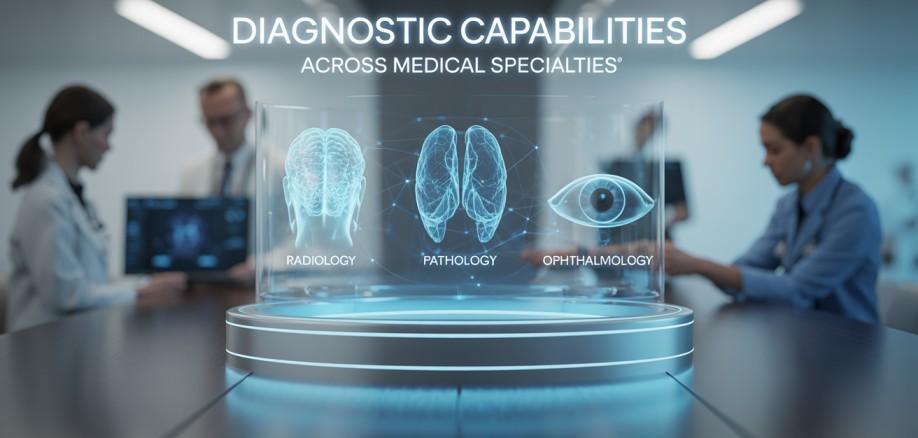
Transforming Diagnostic Capabilities Across Medical Specialties
1. Revolutionary Impact in Radiology
Medical VLMs have demonstrated exceptional capabilities in radiology, where accurate image interpretation is crucial for patient care. Recent studies show that advanced VLMs can achieve diagnostic accuracy rates ranging from 81% to 99.7% across various medical imaging tasks.
Key Performance Metrics:
- Chest radiograph interpretation: 90.4% accuracy with leading models like Qwen2.5
- Multi-specialty imaging analysis: 82.9% overall average across medical specialties
- Emergency imaging assessment: Rapid diagnostic support in time-critical situations
The impact extends beyond simple diagnostic accuracy to also encompass:
Comprehensive Report Generation:
- Analysis of complex radiological images with contextual patient information
- Integration of patient history, clinical notes, and referral information
- Generation of detailed, contextually relevant diagnostic reports
Clinical Reasoning Enhancement:
- Significant reduction in cognitive load on radiologists
- Maintenance of high standards of diagnostic precision
- Support for complex differential diagnosis processes
Emergency radiology has particularly benefited from VLM integration:
- Rapid Diagnostic Support - Providing immediate analysis in time-critical situations
- Multi-Modal Processing - Simultaneous analysis of multiple imaging types
- Clinical Context Integration - Considering patient presentation alongside imaging findings
2. Advancing Pathology and Laboratory Medicine
In pathology, medical VLMs have achieved remarkable success in histopathological image analysis:
Performance Achievements:
- Classification accuracy exceeding 93% for histopathological images
- Support for cancer diagnosis and treatment planning
- Integration of visual analysis with textual pathology reports
Key Capabilities:
- Detection of subtle morphological features challenging for human observation
- Correlation of findings with clinical presentations and laboratory results
- Multimodal approach enhancing diagnostic confidence
- Reduction in likelihood of missed diagnoses in complex cases
3. Ophthalmology and Specialized Applications
Ophthalmology represents another domain where medical VLMs have shown exceptional promise:
Diagnostic Performance:
Did you know? 77.8% of studies show diagnostic accuracy of VLMs is comparable to healthcare professionals.
Diabetic retinopathy screening achievements also include:
- 97.05% sensitivity
- 93.4% specificity
- 99.1% area under the curve
Clinical Applications:
- Large-scale screening programs for at-risk patients
- Early identification before vision-threatening complications
- Automated assessment reducing specialist workload
- Enhanced access to expert-level ophthalmic care
Enhancing Healthcare Workflow Efficiency in VLMs
1. Streamlining Clinical Documentation
One of the most significant contributions of medical VLMs lies in their ability to automate and enhance clinical documentation processes:
Documentation Benefits:
- Automated Report Generation: Comprehensive medical reports integrating visual findings with clinical context
- Time Savings: Significant reduction in documentation time for healthcare professionals
- Clinical Accuracy: Maintenance of high standards while reducing administrative burden
Economic Impact:
- Administrative costs currently account for nearly 25% of total healthcare expenditures
- Automation potential for substantial cost reduction
- Resource reallocation toward direct patient care activities
2. Optimizing Resource Utilization
Medical VLMs contribute to significant cost optimization in healthcare systems through multiple mechanisms:
Cost Reduction Achievements:
- Up to 17-fold cost reduction in certain applications while maintaining high performance
- Improved resource allocation and workflow optimization
- Reduced need for multiple specialist consultations
Efficiency Improvements:
- Automation of routine diagnostic tasks
- Enhanced workflow streamlining
- Optimized specialist resource utilization
- Reduced redundancy in diagnostic data processes
3. Supporting Clinical Decision-Making
Advanced medical VLMs serve as sophisticated clinical decision support tools
Decision Support Capabilities:
- Comprehensive Analysis: Integration of patient symptoms, medical history, and imaging findings
- Evidence-Based Recommendations: Diagnostic reasoning and treatment planning support
- Holistic Assessment: Consideration of both visual findings and textual clinical information
Clinical Benefits:
- More informed decision-making support
- Reduced cognitive burden for complex case analysis
- Enhanced diagnostic confidence
- Improved treatment pathway optimization
Real-World Clinical Applications & Impact
1. Emergency Medicine Revolution
In emergency medicine settings, medical VLMs have demonstrated remarkable potential for improving patient outcomes:
Emergency Applications:
- Rapid Diagnostic Support - Quick analysis of emergency imaging studies
- Clinical Integration - Processing clinical presentations and patient histories simultaneously
- Immediate Insights - Providing diagnostic support within minutes
Trauma Assessment Capabilities:
- Analysis of multiple imaging modalities simultaneously
- Comprehensive assessment of traumatic injuries within minutes
- Priority-based intervention recommendations
- Optimized treatment pathway guidance
2. Telemedicine and Remote Healthcare
Medical VLMs are playing an increasingly important role in expanding healthcare access:
Remote Healthcare Benefits:
- Specialist-Level Analysis: Providing expert diagnostic capabilities in underserved areas
- Geographic Accessibility: Reaching isolated or rural healthcare settings
- Portable Integration: Working with mobile imaging devices and telemedicine platforms
Access Improvements:
- Enhanced healthcare delivery in resource-limited settings
- Reduced barriers to specialist consultation
- Improved population health outcomes
- Democratized access to advanced diagnostic capabilities
3. Educational and Training Applications
Medical VLMs are revolutionizing medical education:
Educational Benefits:
- Realistic Clinical Scenarios - Generation of training cases for medical students and residents
- Risk-Free Learning - Controlled environment for diagnostic skill development
- Real-Time Feedback - Immediate explanations during clinical training sessions
Professional Development:
- Continuing medical education enhancement
- Advanced training scenario simulation
- Reasoning process explanation and understanding
- Competency assessment and improvement
Addressing Clinical Challenges and Limitations
1. Quality Assurance and Safety Considerations
While medical VLMs demonstrate remarkable capabilities, their implementation requires careful attention to quality assurance:
Safety Framework Requirements:
- Comprehensive Evaluation: Assessment of trustworthiness across multiple dimensions
- Accuracy Validation: Continuous monitoring of diagnostic performance
- Fairness Assessment: Ensuring equitable performance across demographic groups
- Privacy Protection: Maintaining patient data confidentiality and security
Identified Concerns:
- Potential factual inaccuracies in some scenarios
- Demographic bias in certain applications
- Need for ongoing safety mechanism development
- Requirement for comprehensive validation protocols
Mitigation Strategies:
- Inference-Time Defense: Strategies to mitigate harmful queries while maintaining utility
- Continuous Monitoring: Ongoing assessment of clinical performance
- Human Oversight: Maintained clinical supervision and validation
2. Ensuring Equitable Healthcare Delivery
Medical VLMs have the potential to address healthcare disparities:
Equity Considerations:
- Consistent Quality - Providing uniform diagnostic support across diverse populations
- Bias Mitigation - Addressing differential performance across demographic groups
- Inclusive Training - Comprehensive dataset curation with diverse representation
Implementation Requirements:
- Standardized validation across multiple clinical environments
- Diverse training data representation
- Ongoing performance monitoring across patient populations
- Cultural sensitivity in clinical applications
3. Integration with Existing Healthcare Systems
Successful implementation requires seamless integration with existing healthcare infrastructure:
Integration Challenges:
- Technical Interoperability - Compatibility with electronic health records
- Workflow Optimization - Enhancement rather than disruption of clinical processes
- User Interface Design - Intuitive systems for healthcare professional adoption
Success Factors:
- Comprehensive clinician education and training
- Ongoing technical support and maintenance
- Gradual implementation with feedback incorporation
- Change management and adoption strategies
Economic Impact and Healthcare Sustainability
1. Cost-Effectiveness Analysis
The economic implications of medical VLM implementation are profound:
Cost Reduction Mechanisms:
- API Cost Optimization - Up to 17-fold reduction while maintaining performance standards
- Administrative Efficiency - Automated documentation and data processing
- Resource Optimization - Enhanced allocation of healthcare resources
Revenue Impact Sources:
- Reduced repeat examination requirements
- Optimized specialist consultation needs
- Enhanced workflow efficiency
- Improved diagnostic accuracy reducing treatment delays
2. Reducing Administrative Burden
Medical VLMs contribute significantly to administrative burden reduction:
Automation Benefits:
- Report Generation - Automated creation of comprehensive medical reports
- Data Entry - Streamlined information processing and documentation
- Routine Analysis - Automated handling of standard diagnostic procedures
Resource Reallocation:
- Healthcare professionals freed for direct patient care
- Reduced administrative overhead costs
- Enhanced operational efficiency
- Improved job satisfaction through meaningful work focus
3. Improving Healthcare Access
Medical VLMs have the potential to dramatically improve healthcare access:
Access Enhancement Mechanisms:
- Resource-Limited Settings - Advanced diagnostic capabilities in underserved areas
- Telemedicine Integration - Specialist-level care through remote platforms
- Portable Systems - Mobile diagnostic capabilities for field deployment
Population Health Benefits:
- Reduced healthcare disparities
- Improved early detection and intervention
- Enhanced preventive care capabilities
- Democratized access to quality medical care
Future Directions and Emerging Opportunities
1. Technological Advancement Pathways
The future of medical VLMs points toward increasingly sophisticated architectures:
Emerging Technologies:
- Multi-Agent Collaboration: Multiple AI agents working together for complex diagnostic challenges
- Causal Reasoning: Understanding relationships between symptoms, conditions, and treatments
- Temporal Analysis: Tracking disease progression and treatment responses over time
Also you can explore, best LLM models in healthcare.
Advanced Capabilities:
- Enhanced clinical decision support approaching specialist-level performance
- Comprehensive multimodal analysis integration
- Predictive modeling for treatment outcomes
- Real-time adaptive learning from clinical experiences
2. Personalized Medicine Integration
Future medical VLMs will increasingly incorporate personalized medicine approaches:
Integration Areas:
- Genomic Data - Combining genetic information with imaging and clinical data
- Risk Assessment - Patient-specific risk profiling based on comprehensive analysis
- Treatment Prediction - Forecasting individual responses to specific treatments
Personalization Benefits:
- Truly individualized treatment strategies
- Precision diagnostic approaches
- Optimized therapeutic interventions
- Enhanced patient outcome prediction
3. Regulatory Evolution and Clinical Validation
As medical VLMs mature, regulatory frameworks continue evolving:
Regulatory Considerations:
- Approval Pathways - Appropriate frameworks for different medical AI applications
- Clinical Trials - Comprehensive studies demonstrating safety and efficacy
- Post-Market Surveillance - Ongoing monitoring of real-world performance
- Responsibility Frameworks - Clear accountability structures for AI-assisted decisions
Validation Requirements:
- Rigorous safety and efficacy standards
- Comprehensive clinical testing protocols
- Long-term performance monitoring
- Ethical consideration integration
Global Healthcare Transformation
1. International Adoption Patterns
Medical VLMs are experiencing rapid adoption across diverse healthcare systems worldwide:
Adoption Factors:
- Infrastructure Variation - Implementation based on local healthcare capabilities
- Regulatory Environments - Compliance with regional medical device regulations
- Resource Availability - Scaling based on financial and technical resources
Collaboration Benefits:
- International knowledge sharing and best practice development
- Accelerated innovation through collaborative research
- Global health challenge addressing
- Cross-cultural validation and improvement
2. Addressing Global Health Challenges
Medical VLMs have significant potential for addressing worldwide health disparities:
Global Impact Areas:
- Limited Infrastructure - Providing advanced capabilities in resource-constrained settings
- Specialist Shortage - Delivering expert-level diagnostic support where specialists are unavailable
- Mobile Health - Integration with portable and mobile health initiatives
Population Health Improvements:
- Enhanced diagnostic capabilities in underserved regions
- Reduced healthcare disparities between urban and rural areas
- Improved early detection and intervention programs
- Strengthened global health security through enhanced diagnostic capabilities
Read more about Digital transformation in healthcare and the latest AI Trends here.
Building Trust and Acceptance
1. Clinician Engagement and Training
Successful implementation requires comprehensive clinician engagement:
Training Program Components:
- Technical Education - Understanding AI capabilities and limitations
- Clinical Integration - Learning effective utilization within existing workflows
- Oversight Protocols - Maintaining appropriate clinical supervision
Collaboration Emphasis:
- Human-AI partnership rather than replacement scenarios
- Enhanced diagnostic capabilities through technology augmentation
- Preserved clinical judgment and patient care elements
- Complementary skill development and utilization
2. Patient Communication and Transparency
Effective implementation requires clear patient communication:
Communication Requirements:
- AI Role Explanation - Clear description of technology's contribution to care
- Benefit Communication - Understanding of diagnostic enhancement and efficiency gains
- Limitation Acknowledgment - Honest discussion of technology constraints
Trust Building Strategies:
- Transparent explanation of AI utilization in healthcare delivery
- Emphasis on continued central role of healthcare professionals
- Patient education about technology benefits and safeguards
- Open dialogue about concerns and questions
The Takeaway: VLMs Welcome New Era of Healthcare Excellence
Medical Vision-Language Models are fundamentally transforming how the healthcare industry processes, interprets, and acts upon complex medical information. The evidence demonstrates that medical VLMs are not merely technological enhancements but represent a paradigm shift toward more intelligent, efficient, and accessible healthcare delivery.
From achieving 90.4% diagnostic accuracy in chest radiograph interpretation to reducing healthcare costs by up to 17-fold, these systems are delivering realistic improvements across diverse medical applications.
The journey toward fully realized medical VLM capabilities is ongoing but the foundation has been established, to evolve it further. As they do, they promise to unlock new possibilities for medical discovery, diagnostic precision, and therapeutic innovation that will benefit patients and healthcare providers for generations to come.